
The authors would like to thank Gareth Fearn, Jonathan Atkinson, Marianne Heaslip, Beth Stratford and Parissa Zand for their comments on this paper.
Millions of households live in cold and damp homes that are increasingly expensive to heat and cause health problems. At the same time, heating homes accounts for about 18 per cent of the country’s greenhouse gas emissions.[1] Around 3.5 million occupied homes in England fail to meet minimum decent homes standards, and nearly 12 million require retrofitting to achieve a basic level of energy efficiency. The burden of cold, damp and unsafe homes falls most heavily on underserved communities — yet existing retrofit programmes have prioritised reducing emissions from individual properties over improving the overall quality of homes and neighbourhoods.
The Warm Homes Plan provides an opportunity to change course, but the approach taken by government prioritises heat pumps and solar panels over ensuring that homes reach basic standards of health and energy efficiency. Though expanding access to clean energy technologies is essential, the plan risks missing those most in need — people living in homes that need substantial repairs to be ready for green upgrades, those struggling with energy bills but with incomes above grant eligibility thresholds, or living in older homes that require navigating more complex interventions and planning restrictions. A neighbourhood-based retrofit strategy — which combines lowering energy bills with addressing homes in need of repair, protecting tenants and bringing empty homes back into use — can shift the narrative that climate policy has failed to improve daily life.[2]
This report sets out a new model for neighbourhood transformation which learns from the place-based programmes that upgraded the nation’s housing stock over the twentieth century. It proposes the establishment of around thirty Home Improvement Corporations operating at county or combined authority scale. These public bodies would coordinate area-based retrofit, employ permanent Direct Labour Organisations to build the workforce, and integrate repairs and wider improvements so homes in poor condition can benefit. Home Improvement Corporations would also hold powers to prevent tenant displacement and bring empty homes into use.
The programme would proceed in two phases. Phase 1 would target all homes below EPC C in the most deprived neighbourhoods (IMD 1 and 2), fully grant-funded and supported by landlord contributions. This would cover around 3.28 million homes at an estimated cost of £19.4 billion, plus £5.8 billion for renewal works, saving these households around £350 a year. Phase 2 would expand to IMDs 3–6, blending grants with property-linked loans. Together, the programme would lower household bills by almost £3.5 billion annually for the bottom 60 per cent of the population.
Poor quality housing is keeping energy bills high, making English households ill and worsening their quality of life. About 3.8 million homes in England do not meet the Decent Homes Standard,[3] and privately owned housing is the most likely to be non-decent: 21 per cent of privately rented homes and 14 per cent of owner-occupied homes.[4] Furthermore, 55 per cent of privately rented homes and 57 per cent of owner-occupied homes require retrofitting to achieve a basic level of energy efficiency (an Energy Performance Certificate (EPC) Energy Efficiency Rating (EER) of C or above).[5] Cold, damp and mouldy homes impose substantial costs on households through elevated energy bills and contribute to health conditions estimated to cost the National Health Service £1.4 billion each year.[6]
This problem is especially felt in underserved communities, where widespread disrepair undermines not only wellbeing but pride in place.[7] Yet the net zero policy agenda is failing to reach people and places most in need of public investment. Government-backed programmes to reduce carbon emissions in the existing housing stock by providing financial support for insulation, heat pumps and solar panels often exclude the worst quality housing by providing minimal funding for repairs needed prior to retrofit.[8] Improving public health and quality of life are subordinated to decarbonisation — though existing schemes have also struggled to achieve emissions reductions due to poor quality work.
In the late 2000s and early 2010s, millions of insulation measures were installed each year. Since then, we have installed between 100,000 and 200,000 per year — a fraction of what is needed to meet our climate commitments and improve living conditions.[9] Our progress towards switching homes to clean heating systems such as air source heat pumps has been too slow to achieve the transformation required, and public spending to help with home repairs has plummeted over the last fifteen years.[10]
The main home energy efficiency programmes of the last several years — the Energy Company Obligation (ECO) and Great British Insulation Scheme (GBIS) — relied on energy companies funding private contractors to install retrofit measures. These schemes almost universally failed to install solid wall insulation without causing major issues such as damp and mould growth. The Government announced in December 2025 these schemes would be terminated after a National Audit Office report found they incentivised contractors to “minimise costs to maximise profits”, leading to substandard workmanship and poor design.[11]
Public programmes have not experienced comparable quality problems. These are not issues inherent to insulation, but to poorly coordinated private supply chains and policy design that tries to achieve maximum emissions reduction at minimum cost. The end of ECO and GBIS creates an opportunity to radically reshape how we deliver retrofit.
The £15 billion committed over this Parliament to insulate homes and install heat pumps and solar panels represents the largest commitment to retrofit in a generation — but without significant changes to policy, we will not make the most of this investment. We must ensure policy materially benefits communities which are currently being mobilised by the far right against net zero.[12]
Privately owned housing — representing more than eight in ten homes in England — presents a particular challenge.[13] Unlike social housing, where registered providers are accountable to meet new standards, private housing largely lacks this institutional infrastructure. Yet reducing emissions, ending fuel poverty, strengthening energy security and improving public health are collective imperatives that demand action across all housing tenures.
Over the twentieth century, older private housing was modernised through an expansive programme of public investment and coordination. Local authorities offered funding to all households which needed to install indoor toilets, baths, kitchens and insulation, make crucial repairs, and even general renovations and extensions that improved living conditions. As part of this effort, local authorities targeted neighbourhoods most in need of investment — not demolishing housing, as in previous slum clearance programmes, but comprehensively improving it for the benefit of existing communities.[14]
The history of efforts to improve private housing is often forgotten in contemporary policy discussions, but it reminds us that there is precedent for public bodies to coordinate home improvements. Understanding how these programmes worked, the impacts they achieved and the lessons they offer should inform our approach to retrofitting our private housing stock for the twenty-first century.
The Warm Homes Plan represents a significant opportunity by giving local and regional authorities a larger role in retrofitting privately owned homes, including the ability to coordinate area-based schemes. The devolution of retrofit funding to mayoral authorities will allow them greater scope to coordinate the supply chain and develop more comprehensive, area-based approaches to retrofit.[15]
However, every place — not just those with existing devolution deals — should be able to benefit from this more comprehensive approach.
Currently, local authorities form subregional consortia to submit competitive bids to central government for retrofit funding.[16] This consumes substantial staff time and resources in bid preparation, often securing funding for relatively small numbers of homes relative to the administrative effort involved.
Retrofitting is a complex intervention which requires a deep understanding of local housing stock, the trust and participation of communities and close coordination of supply chains. A stronger governance framework at the municipal scale is therefore essential.
We therefore propose the creation of subregional Home Improvement Corporations to coordinate area-based schemes. These agencies would operate at county level or combined authority level, creating approximately twenty-five to thirty bodies covering the entirety of England. In areas with established county councils or mayoral/combined authorities, these would provide the institutional basis for Home Improvement Corporations.
At this level, Home Improvement Corporations would be able to combine economies of scale with sustained presence in neighbourhoods. New subregional institutions to coordinate workforce development and area-based implementation would rationalise the resource currently expended on bidding and delivery, providing the scale needed to sustain a specialised workforce.
Improving the standard of existing housing should be taken as seriously as building new homes and towns. Just as Development Corporations were created to coordinate the delivery of new communities, we need new institutions to transform existing neighbourhoods.
This work has been funded by the Energy Demand Research Centre (EDRC), which is supported by the Engineering and Physical Sciences Research Council and the Economic and Social Research Council (grant number EP/Y010078/1). In addition to academic literature and reports, the data used to prepare this report include interviews with experts and practitioners across local government, delivery programmes, industry organisations and academia, and archival materials including government publications and correspondence.
This report uses the terms “place-based”, “area-based” and “neighbourhood-based” to describe schemes which take a collective approach to retrofit or renewal. A place-based approach — which may be as small as a street or as large as a region — responds to the distinct characteristics of a location, seeks to build a local workforce and promotes community participation. An area-based or neighbourhood-based approach aggregates delivery for multiple nearby homes, often on a street-by-street basis.
Though the condition and amenities of privately owned housing are assumed to be the responsibility of the homeowner or landlord, the UK government has historically funded and coordinated improvements to the housing stock. It was through generous state investment from the 1950s to 1980s that much of the older housing stock was repaired and fitted with indoor toilets, bathrooms and kitchens. These efforts were often undertaken on a neighbourhood level, with local authorities improving hundreds of homes at a time. Examining this history — and the weakening of state capacity for housing improvement over the last 30 years — is crucial to understand today’s retrofit challenge.
The first efforts to improve housing conditions were driven by the association between poor quality housing and “the economic costs brought about by the ill health and industrial and political instability of the working classes”.[17] Initially, local governments preferred to improve housing rather than demolish and rebuild. Clearance programmes were considered to worsen overcrowding in nearby areas and cause social unrest, as displaced families could not afford the higher rents of newly built housing.[18]
The 1920s marked a significant expansion of improvement powers, with the Government responding to working-class protests and strikes over housing conditions by granting local authorities enhanced capabilities to force landlords to undertake repairs and oversee area-based improvement schemes.[19] While local authorities also began to build social housing, improvement continued to be prioritised throughout the early 1930s, with hundreds of thousands of homes made fit each year. The work typically included repairs, damp proofing, and the addition of amenities such as kitchens, bathrooms and toilets.[20]
But political attitudes towards improvement also began to shift in the 1930s. The Labour Party and trade unions increasingly viewed improvement as subsidising slum landlords and reinforcing existing class divisions, while Conservatives saw the potential for housebuilding as an economic stimulus. Local authorities started to direct their efforts away from improvement and towards slum clearance and council housebuilding.[21]
The post-war expansion of the welfare state encompassed both mass public housebuilding and the improvement of older private housing, which was seen as a “national asset” requiring modernisation.[22] New direct grants for improvement also supported the expansion of homeownership.[23] Between 1953 and 1971, more than two million older privately rented homes were transferred into owner-occupation, with improvements supported through grant aid.[24]
As public opposition to slum clearance became widespread in the late 1960s and the costs of council housebuilding rose, the improvement of existing housing was reemphasised.[25] The 1969 and 1974 Housing Acts increased grants for renewal and expanded local authority powers to declare area-based schemes, including General Improvement Areas and Housing Action Areas. More than one million homes received grants over the 1970s.[26]
The early 1980s saw further expansion of renewal grants, aligning with broader efforts to promote homeownership while stimulating employment in the construction sector.[27] Between 1979 and 1987, more than one million improvement grants were distributed by local authorities, while public spending on housebuilding was simultaneously reduced.[28]
National energy security emerged as an urgent priority following the 1973-1974 energy crisis. The 1978 Homes Insulation Act established a duty for local authorities to reduce energy consumption through a 66 per cent insulation grant for all households, later complemented by enhanced support for older people, people with disabilities and those on low incomes.[29] The scheme installed loft insulation in three million homes between 1979 and 1987.[30}
[.fig]Figure 1: Grants to Homeowners in England and Wales, 1945-95[.fig]

[.notes]Source: Leather, 2000.[.notes]
In the mid-1980s, the Government moved to restrict renewal assistance, reflecting broader welfare state residualisation where public spending became limited to those deemed in greatest need. The 1985 Green Paper “Home Improvement — A New Approach” established that most homeowners bore responsibility for maintaining their properties, with increasing house prices supporting this consensus.[31] The number of grants disbursed fell by half following introduction of means-testing for grants in 1990 and subsequent funding cuts.[32] Home Improvement Agencies — commonly called “Care and Repair” or “Staying Put” — emerged to administer this new system.[33]
Against a wider backdrop of funding cuts for maintenance, social housing regeneration programmes were introduced as part of the drive to transfer stock from councils to housing associations.[34] The 1997-2010 Labour government introduced new housing quality standards and a national Decent Homes Programme to bring social housing up to standard but established no equivalent programme for private housing.[35]
The first generation of area-based schemes for private housing were replaced with larger regeneration programmes that reemphasised demolition in addition to refurbishment. Unlike earlier slum clearance programmes, however, demolished housing was replaced by new private housing rather than social housing. Housing Market Renewal Areas sought to stimulate "low demand" housing markets, improving more than 100,000 homes and demolishing 30,000 across a dozen cities in the North and Midlands.[36]
New Labour significantly expanded energy efficiency programmes. Reaching millions of homes over the 2000s, some offered universal assistance while others focused on low-income households.[37] This approach was rolled back by the 2010-2015 Coalition government, which restricted retrofit support and terminated central funding for renewal.[38] However, under pressure from rising unemployment during the Covid-19 pandemic and 2022 energy price shock, the Boris Johnson and Rishi Sunak governments renewed funding for energy efficiency programmes, and the Labour government has committed £13.2 billion over this parliament.[39]
Though regeneration strategies have often relied on demolition and redevelopment, there are strong historical precedents for preserving and improving existing housing and communities. These initiatives concentrated resources in disadvantaged neighbourhoods, operating within a national framework of financial assistance to bring homes up to contemporary standards. Despite their limitations, they remain the most relevant precedent for the investment in neighbourhoods needed today.
From the 1950s, governments expanded grant aid for basic amenities such as internal plumbing, alongside stronger powers for local authorities to acquire homes where landlords failed to act.[40] By the late 1960s, opposition to slum clearance and new evidence of widespread disrepair shifted emphasis towards area improvement. Housing Action Areas (HAAs), introduced under the 1974 Housing Act, targeted older urban housing which would previously have been targeted by slum clearance programmes. HAAs also sought to reduce tenant displacement, recognised as a weakness of the earlier General Improvement Areas (GIAs).[41]
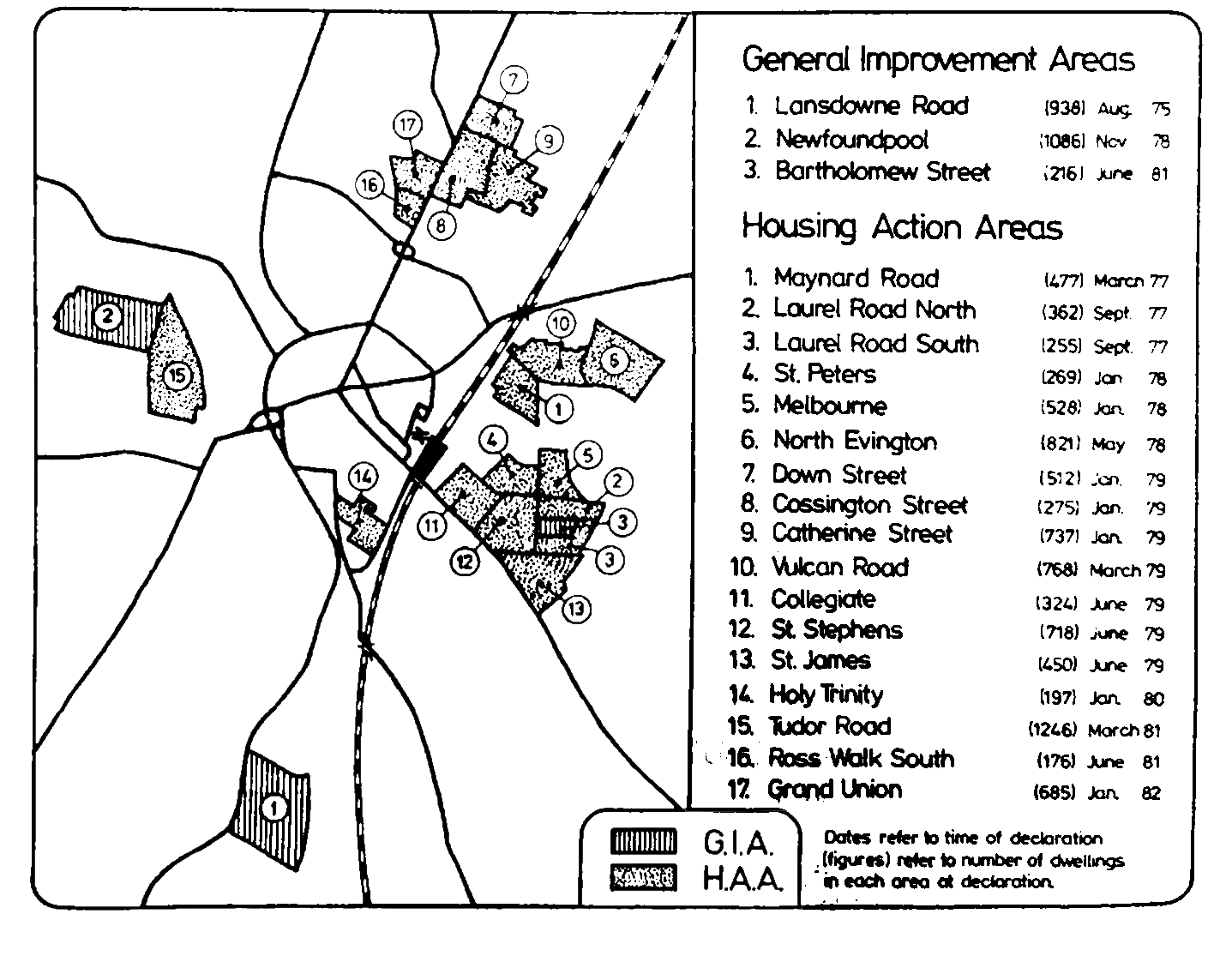
Local authorities could declare HAAs of 200–400 homes with poor conditions and social disadvantage, where most housing was privately rented or owner-occupied. Most HAAs covered areas of pre-1919 terraced housing. The 1976 National House Condition Survey deemed 300,000 homes suitable; 126,000 were included in about 300 HAAs within five years.[42] Councils had considerable discretion over how to use their powers, including whether to acquire homes, rely on private builders or DLOs and allocate additional resources to improve the surrounding public realm.[43]
All property owners, including landlords, could obtain 50 per cent grants for basic amenities and general improvements. This increased to 75 per cent grant in GIAs and HAAs, rising to 90 per cent for low-income owners.[44] In the early 1980s, grant levels for owners outside of these areas were also increased. In 1974, the maximum improvement cost was set at approximately £30,400 in today's money, meaning the 75 per cent grant covered about £22,800 and the 90 per cent grant about £27,400.[45] Local authorities and building societies could offer low-interest loans to cover remaining costs.[46]
The scope of eligible improvements was comprehensive. Eligible works included bathrooms, kitchens, roofs, walls, windows, damp-proofing, insulation and essential safety upgrades.[47] Homes beyond repair were demolished as a last resort.[48]
[.fig]Figure 2: “Renewal Strategy: Sixth Annual Review”, Leicester City Council, 1982[.fig]
[.notes]Source: Leicester City Council, 1982.[.notes]
Leicester City Council set a target to improve 35,000 older homes between 1976 and 1991, representing about a third of the city’s housing stock. The objectives of the strategy included dealing with bad housing conditions, improving the wellbeing of residents, avoiding the need for future clearance programmes and promoting participation by residents in the renewal process. A 1982 report on the programme notes the challenges in engaging private landlords, who owned 22 per cent of homes in HAAs but carried out only 12 per cent of improvement work. The council took statutory action against landlords in 75 per cent of properties inspected.
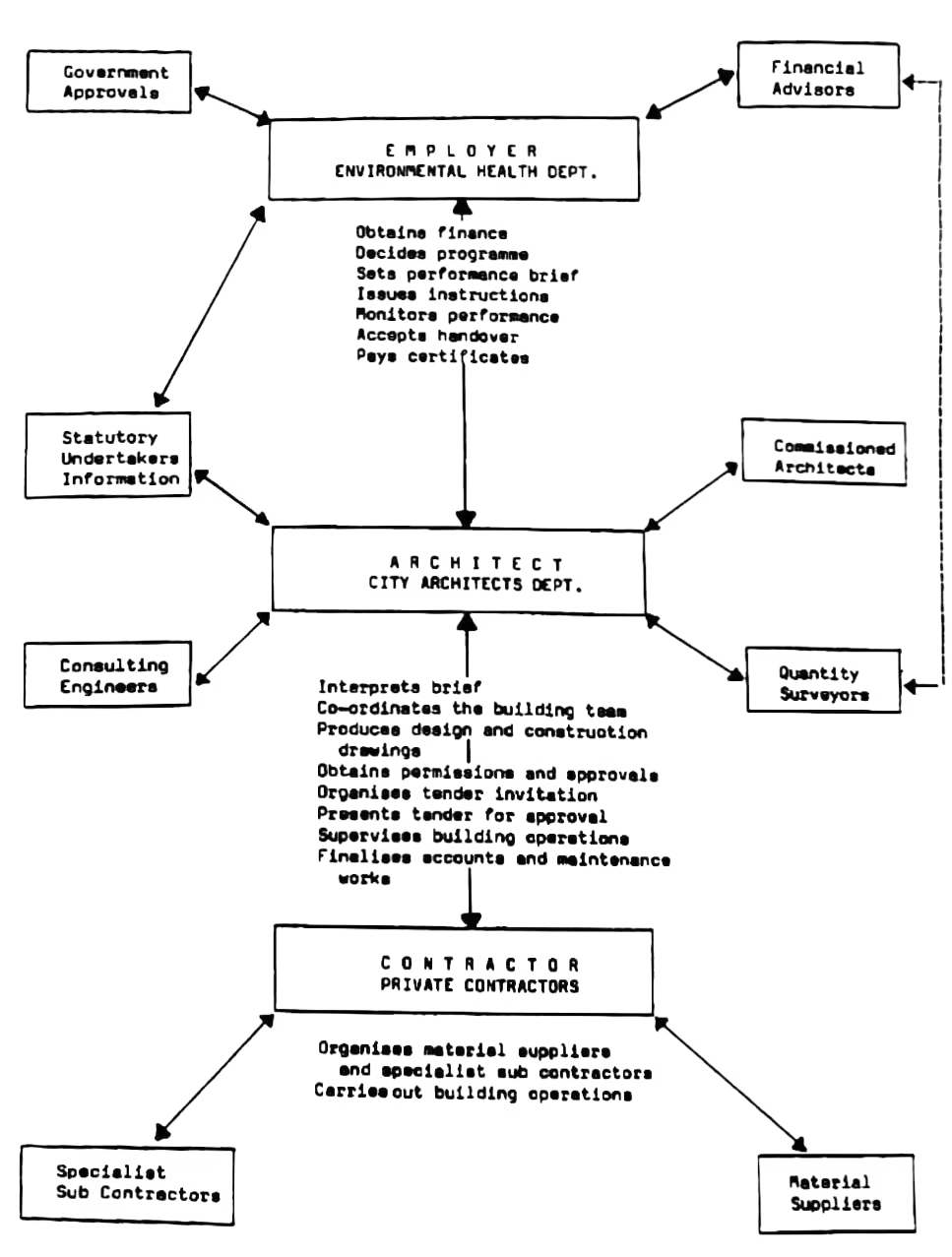
A variant of HAAs pioneered in Birmingham in 1977, enveloping schemes improved the exteriors of whole streets of terraced housing or blocks of flats in a single project. The Government supported the replication of this approach, covering about 10,000 homes over the 1980s, on the basis that it could achieve a more impactful effect, greater economies of scale and a higher standard of work than traditional HAAs.[49] Enveloping schemes spread across the country, notably in Leeds, Leicester, Hull and Cardiff.
Owners were not required to contribute to project costs, though they were encouraged to apply for grants to make simultaneous internal improvements.[50] The rationale for full subsidy was to secure participation of every household in a terrace or block.[51] Enveloping schemes replaced roofs, doors, windows and guttering, and repointed or replaced brickwork. They also included redecoration and wider works such as replacing paving, garden walls and demolishing outbuildings.[52]
[.fig]Figure 3: City of Birmingham envelope scheme, 1983[.fig]
[.notes]Source: KR Hunter, 1983.[.notes]
Like today, the private rented sector was the housing tenure in the worst condition, with 15 per cent deemed unfit and 26 per cent lacking basic amenities, according to the English House Condition Survey of 1976 and National Dwelling and Housing Survey of 1978. Surveys also found that small landlords often could not afford improvement costs because controlled or regulated rents did not cover expenses. Enhanced powers under the 1974 Act enabled local authorities to compulsorily acquire or negotiate the purchase of properties from landlords unwilling or unable to take up improvement grants, while also offering protection against arbitrary eviction of tenants. Acquired housing could be retained in public ownership or transferred to housing associations and cooperatives.[53]
Attempts to prevent tenant displacement responded to growing political recognition of gentrification and the more pragmatic ambition to reduce demand for council housing by keeping private tenants in their homes. Landlords were required by the Housing Act 1974 to provide proof that the property would remain rented, and to repay the grant value with compound interest to the local authority if they breached this condition by selling the property. Owner-occupiers of recently tenanted properties were ineligible for grants. Councils typically did not announce where HAAs would be prior to formal declaration to prevent landlords from evicting tenants in anticipation of investment in the area.[54]
HAAs appeared in the period following the influential 1969 Skeffington Report on People and Planning, which set out the first framework for community involvement in planning and urban renewal. Though some officers administering HAAs sought to limit residents’ input and power over decision-making, councils generally worked to promote resident involvement.[55] At a minimum, councils were required to hold public meetings and issue newsletters and leaflets. Officers conducted one-on-one meetings with residents and local offices were established to offer information and advice. Councils often helped set up residents’ associations to engage with the HAA process. The most progressive of these involved residents at each stage of the process, forming or modifying plans based on residents’ views.[56]
Local authorities were constrained by limited budgets and staff resources, hampering their ability to declare HAAs and use their powers effectively. Compulsory purchase powers had been strengthened but were still considered inadequate. Inflation and rising building costs eroded the real value of grants over the 1970s. Gaps in provision contributed to the underrepresentation of very poor households among grant recipients. Grants could be scaled up to 90 per cent for low-income households, but those on very low incomes struggled to contribute the remaining ten per cent — even with the availability of low-interest loans. Improvement projects could require households to temporarily relocate or redecorate after major works, but only some councils covered these costs.[57]
Ultimately, measures to prevent displacement could not contain the effect of public investment in housing quality on the long-term private investment potential of inner-city housing. In effect, grants subsidised a new generation of homeowners returning to cities. This included both direct support to homeowners and funding that initially benefited existing tenants, but primed homes for future buyers after tenants were eventually displaced or chose to relocate.
The history of Housing Action Areas and enveloping schemes demonstrates that transformative improvement of private housing at neighbourhood scale is both possible and has proven precedent in England. These programmes upgraded hundreds of thousands of homes through coordinated public investment, area-based delivery and democratic oversight. They recognised that improving housing quality cannot fully be an individual responsibility, but a collective one requiring state action.
These programmes also offer critical lessons about what must be done differently. Even with generous grant rates and resources dedicated to engagement, vulnerable households were sometimes excluded. Protections against displacement proved insufficient to prevent gentrification as public investment increased property values and attracted new owner-occupiers to improved neighbourhoods. And the programmes were ultimately dismantled as part of the broader political shift towards welfare residualisation and the assetisation of housing.
A twenty-first century programme of neighbourhood transformation must learn from this history. It must provide full funding to ensure universal access and address the range of barriers to participation for different groups. It must include tenant protections and mechanisms to prevent displacement through stronger regulation of the private rented sector. And it must be embedded within a political project that reasserts private housing as a “national asset” essential to public health and wellbeing.
The history of public involvement in housing renewal in Britain demonstrates how public coordination can transform housing at scale. From the Housing Action Areas and enveloping schemes of the 1970s, to the Decent Homes Programme for social housing in the 2000s, past governments have recognised that area-based investment is often the most effective way to improve homes. Yet the state’s role in housing quality has moved from comprehensive intervention to minimal support, and retrofit policy has focused on the decarbonisation of individual homes while leaving wider housing issues unaddressed. This reflects a broader transformation in which homes have been rendered financial assets, with their increasing value justifying the withdrawal of state support for housing quality.
The Warm Homes Plan offers the chance to break with this failing approach. If treated merely as an emissions reduction programme, it will fail to reach the low-income homeowners and private tenants who most need support, and will squander a major opportunity to deliver social, health and economic benefits alongside carbon reduction. But if designed as a comprehensive place-based programme, it can revive a tradition of housing improvement that combines climate action with better living conditions, tenant protections and pride in place.
We propose the creation of new subregional Home Improvement Corporations to coordinate this effort. These bodies would future-fit homes in the poorest neighbourhoods, working with communities to design each scheme, employing Direct Labour Organisations (DLOs) to build a skilled workforce and using public powers to prevent displacement and bring neglected homes back into use. Unlike retrofit programmes focused on individual homes, or regeneration strategies centred on demolition and replacement, Home Improvement Corporations would deliver neighbourhood transformation.
In Phase 1, Home Improvement Corporations would deliver fully grant-funded retrofits across IMD 1 and 2, the most deprived fifth of areas in England, building on the Local Grant scheme’s foundation. The aim should be to reach every home below EPC C in these neighbourhoods, with additional funding to address disrepair and bring empty properties back into use. Phase 2 would expand to IMDs 3–6, blending grant support with zero-interest, property-linked loans for middle-income households.
Home Improvement Corporations would serve as the primary vehicle to deliver housing decarbonisation and tackle fuel poverty at scale, focusing on the owner-occupied and private rented sectors where distributed ownership has left institutional capacity weakest. While social housing undoubtedly requires investment, social landlords already operate within established regulatory frameworks and funding streams such as the Warm Homes: Social Housing Fund. Home Improvement Corporations would therefore concentrate on privately owned housing, though they would work closely with social landlords on workforce development, community engagement and area-wide planning to ensure a coherent approach across all tenures.
Around thirty Home Improvement Corporations would operate across England at the scale of counties or combined and mayoral authorities. This subregional level is large enough to generate economies of scale and sustain a permanent skilled workforce, but close enough to communities to enable genuine co-design and democratic oversight. Critically, these agencies would be established through coalitions of local authorities regardless of whether areas have existing mayoral or combined authority structures, ensuring that no community is left behind.
Central government would establish the legislative and funding architecture within which Home Improvement Corporations operate. The Department for Energy Security and Net Zero should take the lead, given its responsibility for energy efficiency and net zero policy, working in formal partnership with the Ministry for Housing, Communities and Local Government to align with housing quality standards, tenant protections and local authority coordination. Together, these departments would set national standards, reporting requirements and equity safeguards that ensure consistency and quality across the country.
New primary legislation modelled on the New Towns Act 1981 and subsequent Development Corporation legislation would give Home Improvement Corporations the statutory basis to act. Their powers would include compulsory purchase authority for long-term empty properties and homes failing to meet minimum standards, alongside borrowing powers backed by government to issue bonds or community municipal investments, establish revolving loan funds and raise private finance alongside public grants.
However, the legislation must make an explicit distinction between Home Improvement Corporations and Urban, New Town or Mayoral Development Corporations. Regeneration companies formed as partnerships between local government and private sector developers have overseen the large-scale transfer of public assets into private hands.[58] The statutory framework for Home Improvement Corporations would be tightly defined around retrofit, repair and neighbourhood improvement, categorically excluding demolition and redevelopment. Compulsory purchase powers could not be used for redevelopment purposes, and asset disposal would be restricted to cases directly supporting the retrofit mission, such as bringing empty homes back into use.
Home Improvement Corporations would exist as statutory arm’s length bodies, legally separate from but democratically accountable to their founding local authorities. Each would have its own chief executive and management team directing day-to-day operations including programme delivery, workforce management and financial administration.
This institutional separation matters because it would allow Corporations to operate at the subregional level and create space for an organisational culture organised around the retrofit mission. However, Corporations must remain accountable to local governments and the public.
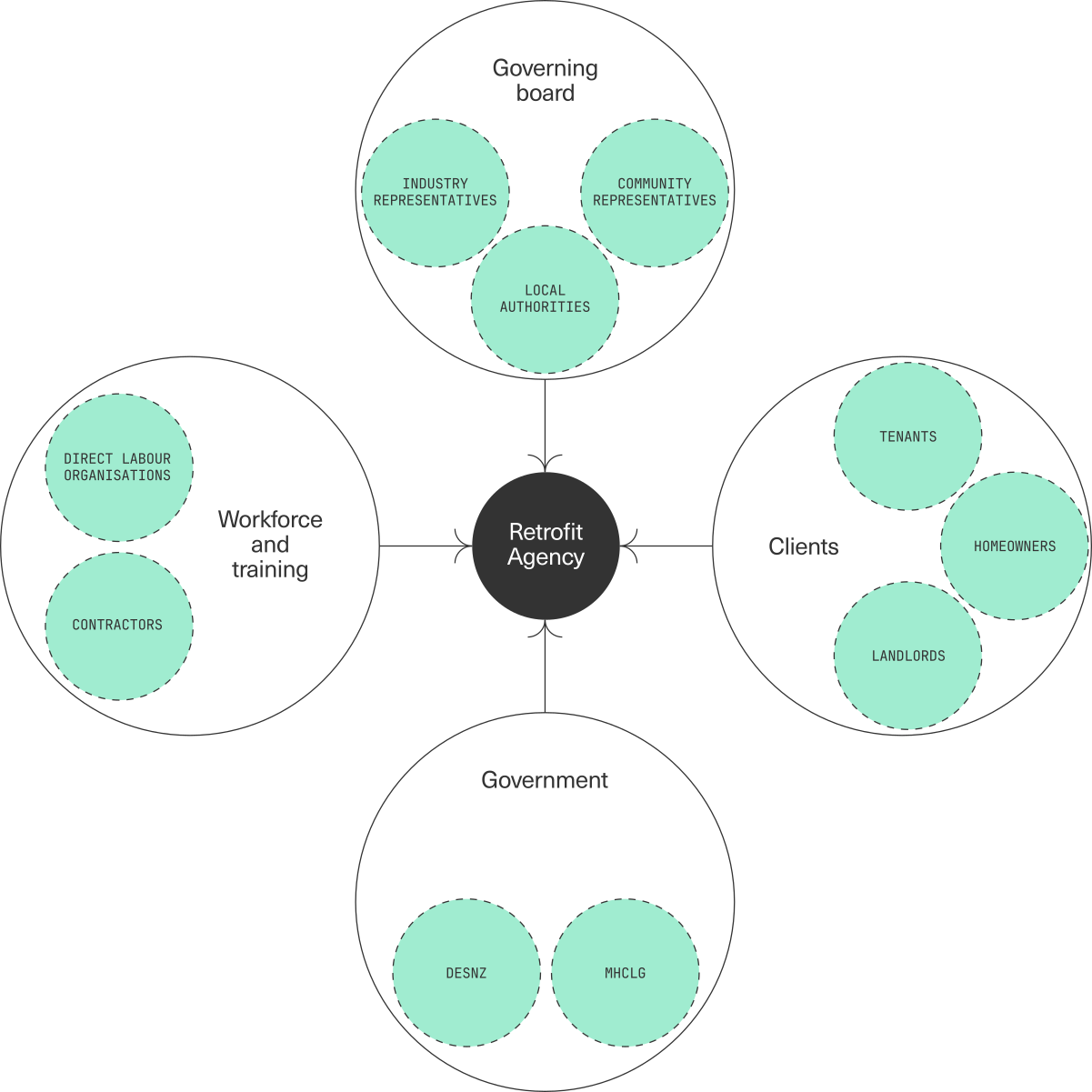
[.fig]Figure 4: Proposed Governance Structure for Home Improvement Corporations[.fig]
[.notes]Source: Authors' proposal.[.notes]
Home Improvement Corporations would wield substantial powers and command significant public resources — and history shows the potential for abuse of power. Development Corporations in the 1980s through to the 2000s tended to operate with minimal accountability, effectively handing decision-making to non-elected committees and mostly excluding local policymakers and communities.[59] More recently, Mayoral Development Corporations have been the subject of controversies regarding their democratic transparency and use of public assets.[60]
The governance framework for Home Improvement Corporations must learn from this history. Corporations would be governed by elected boards comprised of representatives from local government, industry and communities. Elected representatives from constituent local authorities would hold a majority of seats. Industry professionals with expertise in housing, energy efficiency and construction would bring necessary technical knowledge. Crucially, community representatives would hold at least one quarter of board seats, with these positions filled through open elections in the areas served. Boards would hold regular public meetings in the communities they serve, with residents able to attend, observe decision-making and ask questions directly.
A national regulator, either within the Department for Energy Security and Net Zero or established as an independent statutory body similar to the Social Housing Regulator, would licence Home Improvement Corporations and inspect their governance, financial management and delivery standards, including quality of retrofit work and community engagement. The regulator would hold powers to intervene or withdraw licenses where corporations fail to meet required standards. Annual reports and accounts would be audited by the National Audit Office.
Citizens must have meaningful recourse when things go wrong. An independent ombudsman would investigate complaints about Corporation conduct and hold powers to require redress where appropriate. Communities could trigger formal performance reviews by petition, and constituent local authorities would retain the power to remove board representatives who breach standards or act against the public interest.
Currently, local authorities delivering national retrofit programmes rely on large private contractors, who subcontract out work to different firms. Local authorities must complete work within a short timeline set by national government, giving them little ability to invest in long-term skills development. This model drives up the costs of procurement and creates labour scarcity when local authorities have to compete for workers within the same tight delivery window.[61] It has also created a retrofit workforce that is poorly paid, employed on temporary contracts, and largely de-unionised. Workers lack employment security and have little stake in the quality of their work.
With the UK already facing a severe shortage of workers in construction and retrofit trades, simply scaling up these existing contracting arrangements will not meet the ambition of the Warm Homes Plan. An estimated 140,000 new workers will be needed to achieve Labour's commitment to retrofit five million homes in the next five years — but the fragmented, low-wage employment model that dominates the construction industry cannot deliver this workforce.[62]
Home Improvement Corporations should therefore establish their own Direct Labour Organisations (DLOs) — workforces directly employed by local authorities — to build a permanent workforce of retrofit installers, coordinators, assessors and architects, supported where necessary by the private sector and co-operatives. This model is particularly well-suited to retrofit because it enables the deep, sustained engagement with local housing stock and communities that successful retrofit requires, while building the stable skilled workforce needed for long-term decarbonisation.
Publicly owned labour forces are not new. Local authority DLOs maintained housing and infrastructure throughout much of the twentieth century, and Glasgow City Council’s City Building — one of Scotland’s largest construction firms — continues to demonstrate the viability of this model. All staff are permanent employees; the organisation provides a comprehensive four-year training programme; and the unionisation rate is nearly 100 per cent compared to the Scottish national average of 19 per cent.[63]
DLOs would provide stable, full-time employment with strong trade union rights and create a pipeline of skilled workers through apprenticeships, on-the-job training and partnerships with colleges and training providers. Apprenticeships and training programmes would help address the skills shortage while also opening up opportunities for women, young people and groups underrepresented in construction.[64] By employing workers directly, DLOs would reduce reliance on subcontractors, prevent cost inflation from competition for scarce labour and build a consistent standard of quality.
Higher pay would attract and retain skilled workers, long-term contracts would provide workers with employment security that encourages pride in workmanship. Onsite training would allow workers to continuously improve and specialise their skills, replacing the fragmented accountability of subcontracting chains with clear lines of responsibility. Workers in the retrofit trades could collaborate directly with architects to design schemes, embedding practical expertise into planning from the outset.
This accountability would extend to residents, communities and government. Workers employed directly by Home Improvement Corporations would be involved in retrofit projects from the design stage through to handover and aftercare, enabling a deeper understanding of the housing stock and residents’ needs. Communities would know who is working on their homes and have clear routes to raise concerns or provide feedback, with the Home Improvement Corporation directly responsible for addressing issues rather than disputes being lost in subcontracting chains. Government oversight would become more straightforward, with Home Improvement Corporations reporting directly on the skills, productivity and quality standards of their workforce.
Over time, the upfront investment in a permanent workforce would be offset by lower costs from reduced subcontracting and higher productivity from a stable, skilled workforce. Crucially, it would also demonstrate that public investment in decarbonisation can create fairly paid, secure jobs.
Home Improvement Corporations would facilitate a deeper approach to community participation than what has been possible under existing retrofit programmes. It is important to distinguish between participation and consultation, where “engagement” means presenting residents with decisions that have already been made, or where community input is gathered but ultimately ignored. Home Improvement Corporations must establish something qualitatively different: a statutory co-design process where residents and local groups shape the priorities and approach of area-based projects.[65]
Existing place-based retrofit programmes recognise the importance of tapping into local relationships and institutions. People Powered Retrofit, a not-for-profit retrofit service in Manchester, uses “community-based social marketing” — word-of-mouth recommendations between neighbours, supported by community champions.[66] RetrofitWorks, a national cooperative with several local branches, engages community advocates. Retrofit Balsall Heath, a community project in Birmingham, went door to door and held events to spread the word about the opportunity to apply for Birmingham City Council’s retrofit programme, securing funding for 700 homes.[67]
Home Improvement Corporations should develop area-wide communication campaigns that use trusted local networks. Campaigns should explain the benefits of retrofit in terms of comfort, health and home environment — not just energy savings — provide opportunities for residents to see completed retrofits in their neighbourhood.
Campaigns must acknowledge the history of problems in retrofit programmes, most recently under ECO4 and GBIS. Residents who have experienced poor-quality work will be understandably sceptical. Home Improvement Corporations should be honest about past failures, explain how their programme will be different and make clear what protections and support households can expect.
Home Improvement Corporations must establish a statutory co-design process that encourages residents and local groups to shape area-based projects. This process should start with early engagement to establish how communities wish to participate. Home Improvement Corporations should approach existing community groups including residents’ associations, faith organisations and third sector groups to understand how to engage with residents. This initial phase should determine appropriate venues, timing and formats for engagement activities as well as translation and accessibility requirements. It should also identify local power imbalances, and which groups are at risk of being excluded from the process and develop strategies for how to include these groups.
Following this preparatory work, Home Improvement Corporations should convene public meetings to present the retrofit opportunity to the wider community. These meetings should establish the stages of the process and the scope for residents to shape the work. Architects and contractors should be involved in these early stages of engagement to build trust with residents and understand local conditions.
Home Improvement Corporations would then contact residents and landlords individually to invite their participation. Home visits should explain available improvements, assess the energy performance and general condition of their homes, and understand their circumstances and needs. Particular efforts must be made to engage both tenants and landlords, ensuring their opportunities, rights and responsibilities are understood. Home visits should be arranged at times convenient to residents and should provide honest information about both the benefits of works and the disruption they will involve.
Home Improvement Corporations would develop detailed project briefs covering scope and timelines, with further feedback invited before works start and changes to the brief made as needed. Clear processes for addressing concerns must be established and communicated to residents before delivery begins.
Home Improvement Corporations should establish Resident Liaison Officer (RLO) roles, drawing on models such as Nottingham City Homes’ Energiesprong programme and the RetrofitWorks cooperative. These officers would provide a continuous relationship through what can be a lengthy and disruptive process and can identify problems early before they escalate. Home Improvement Corporations might also consider recruiting community advocates — trusted local residents who can build relationships with neighbours and provide ongoing peer support.
Residents must have clear comeback when works are poorly done or damage their homes. All publicly funded retrofit projects must comply with PAS 2035, a UK-wide standard that requires Retrofit Coordinators who ensure quality, risk management and resident engagement throughout projects, acting as an independent check on installation work. In addition to this, Home Improvement Corporations should establish clear processes for reporting issues after completion, a guarantee to remediate problems and escalation routes if residents are not satisfied by responses. Post-completion home visits should explain changes to residents' homes, gather feedback and provide an ongoing point of contact.
Retrofit programmes must recognise that millions of homes require more than energy efficiency measures alone. Poor quality housing is widespread in the owner-occupied and private rented sectors, and without addressing damp, mould, disrepair and structural issues, many households will remain beyond the reach of standard retrofit schemes. Unless remedial and enabling works are integrated into delivery, both decarbonisation and fuel poverty targets will be missed, and public funding will be underspent.
Twenty-one per cent of privately rented homes and 14 per cent of owner-occupied homes fail the Decent Homes Standard (DHS), suffering from serious health and safety hazards.[68] The Decent Homes Programme of the 2000s transformed the social housing sector, cutting non-decency from 38 per cent to ten per cent.[69] Yet no equivalent institutional support exists for private housing, where local authority assistance to low-income households has been patchy and further weakened by funding cuts since 2011.[70] Even homes that technically meet the DHS often conceal hidden issues that require attention before insulation, heat pumps or solar panels can be installed.
Retrofit programmes such as ECO4 have provided very minimal funding for such wider works. As a result, the homes most in need of investment are systematically excluded. Experience suggests that repairs can add an average of 26 per cent to the cost of retrofits.[71] In underserved communities, where poor conditions are concentrated, a higher average spend on repairs must be assumed if retrofit is to succeed. Home Improvement Corporations should therefore plan for at least 30 per cent of budgets in these areas to be devoted to remedial and enabling works.
Historical and contemporary examples show this is feasible. Leeds City Council’s Priority Neighbourhood Area approach integrated retrofit with wider home and neighbourhood improvements. Many homes required new roofs, gutters, damp courses, windows and doors, as well as streetscape improvements. Had the scheme not addressed these issues, it would not have been possible to install external wall and roof insulation. The scheme also included improved bin storage and repairs to boundary walls and pavements.[72] This approach provides a model for how Home Improvement Corporations could combine decarbonisation with the wider renewal of homes and communities.
England’s older housing — comprising around 35 per cent of privately rented homes and 21 per cent of owner-occupied homes[73] — is typically built with solid brick walls. Homes built before 1919 are the most expensive and complex to insulate: only ten per cent of solid-wall homes are insulated.[74] External solid wall insulation costs between £8,000 and £22,000 per property and internal wall insulation costs £7,500 on average for a three-bedroom home.[75] If not installed properly and with ventilation, they can cause damp and mould — as highlighted by widespread insulation failures under the energy company obligation (ECO) schemes.[76]
These challenges are compounded by planning restrictions, as many pre-1919 homes are located in conservation areas where external alterations require consideration of heritage impacts. Internal solid wall insulation, while less visually intrusive, reduces living space and can require residents to relocate during works.
The historical precedent of Housing Action Areas demonstrates that pre-1919 housing is best improved through coordinated neighbourhood programmes. HAAs recognised that treating individual properties in isolation was ineffective — whole terraces needed improvement to achieve economies of scale. The same logic applies today to solid wall insulation. Home Improvement Corporations would coordinate solid wall insulation programmes across entire streets and neighbourhoods, reducing costs through bulk procurement. Using Direct Labour Organisations owned by Home Improvement Corporations rather than unaccountable private contractors — as in the energy company obligation schemes — would ensure a higher quality of work. They could address the disruption — external scaffolding, temporary relocation and site management — which individual households struggle to navigate alone.
Home Improvement Corporations would also navigate the planning process more effectively. Individual homeowners face barriers when applying for planning permission for external insulation in conservation areas, with applications often taking months and costing hundreds of pounds. Home Improvement Corporations would submit planning applications covering whole streets, working proactively with conservation officers.
Solid wall construction is much more common in former industrial towns, and regions such as the North West and the Midlands contain large shares of them.[77] These homes are also more likely to house low-income households and those experiencing fuel poverty.[78] Without new institutions capable of this level of coordination, these homes will remain largely untouched. This would entrench regional inequalities and undermine the social contract for climate action.
Home Improvement Corporations would not apply a standardised approach to every neighbourhood but, working with communities, develop strategies that respond to local housing characteristics, energy infrastructure and community needs. Individual rooftop solar may suit areas with detached housing, while in dense terraced areas or blocks of flats it might make more sense to establish community solar projects or small wind turbines where energy can be shared by whole neighbourhoods. Similarly, heating systems would vary by context: individual air source heat pumps may work well in some locations, but networked ground source heat pumps or district heating networks would be better suited to denser areas. Home Improvement Corporations would also coordinate with Distribution Network Operators (DNOs) to manage new electrical load and generation capacity.
For area-based retrofit schemes to succeed, every household in a neighbourhood must be offered financial support. Past programmes demonstrate this clearly. The Kirklees Warm Zone, for example, retrofitted 50,000 homes — a third of the borough — by offering free insulation to all households.[79] Similarly, Leeds’ Priority Neighbourhood Approach delivered comprehensive improvements to hundreds of households in low-income areas by capping homeowner and landlord contributions at 25 per cent.[80] Historic Housing Action Areas and enveloping schemes also relied on universal financial support to ensure widespread uptake. Without this principle of universal support, area-based retrofit is not feasible.
The Warm Homes: Local Grant programme takes a positive step in this direction by introducing area-based eligibility. However, its £500 million budget is only enough to reach 30,000–50,000 homes, far short of the scale required.[81] To be effective, the Warm Homes Plan must expand this approach and provide the resources needed to reach millions of homes.
We propose that Home Improvement Corporations use the Warm Homes Plan as the foundation for a nationwide programme of area-based retrofit. Phase 1 would focus on households in the most deprived 20 per cent of areas (IMD deciles 1 and 2), expanding on the Local Grant scheme. In these neighbourhoods, all homes with an EPC rating below C would be eligible for support. This represents around 3.28 million homes, or 57 per cent of all households in IMD 1 and 2.[82] At an average cost of £5,900 per home — based on Department for Energy Security and Net Zero estimates[83] — the total cost of raising these homes to EPC C would be £19.4 billion.
Funding would come from three main sources.
[.num-list][.num-list-num]1[.num-list-num][.num-list-text]The Labour Government's Warm Homes Plan commits £13.2 billion over this Parliament.[.num-list-text][.num-list]
[.num-list][.num-list-num]2[.num-list-num][.num-list-text]Landlord contributions would provide an additional £5.4 billion. Under existing proposals, social landlords are expected to fund at least half of their retrofit costs, while private landlords can receive 100 per cent funding for their first property in fuel poverty but must contribute 50 per cent thereafter. Given tenure patterns in IMDs 1 and 2, this amounts to a substantial private contribution.[.num-list-text][.num-list]
[.num-list][.num-list-num]3[.num-list-num][.num-list-text]Additional public funding will be required to cover enabling and remedial works. Because disrepair is more widespread in underserved communities, Home Improvement Corporations should assume an average of 30 per cent of project costs will be needed for these works. This adds an estimated £5.8 billion.[.num-list-text][.num-list]
These different sources of investment are summarised in Figure 5.
[.fig][.fig-title]Figure 5: Phase 1 of Plan for Places[.fig-title][.fig-subtitle]Funding sources for the first phase of Plan for Places, focused on IMDs 1 & 2, excluding for enabling and remedial works[.fig-subtitle][.fig]
[.notes]Source: Authors’ calculations.[.notes]
Fourth, establishing Home Improvement Corporations will require upfront and ongoing investment. We estimate national setup costs of around £800 million to establish thirty Corporations and annual budgets of £2–3 billion. Spread across the 3.28 million homes in Phase 1, this equates to roughly £3,500–5,000 per home in delivery costs, on top of capital spending on retrofit and remedial works. This investment would create more than a hundred thousand skilled public sector jobs and reduce reliance on fragmented subcontracting — lowering costs in the medium term and ensuring delivery to a consistent standard.
Taken together, Phase 1 funding would be sufficient to retrofit all homes in IMD 1 and 2 to EPC C, while also addressing disrepair and bringing empty homes back into use. Households would keep the full benefit of energy savings, averaging £350 per year, or more than £1.15 billion annually across the target areas.
Phase 2 would extend the programme to households in IMDs 3–6, covering a wider share of the population. Here, Home Improvement Corporations would introduce a blended funding model, combining public grants with zero-interest, property-linked loans. Households in IMDs 3 and 4 would receive 60 per cent grant funding and 40 per cent loan, while those in IMDs 5 and 6 would receive 40 per cent grant and 60 per cent loan. Social landlords would continue to receive 50 per cent grant funding, while private landlords would be required to cover the full cost of works.
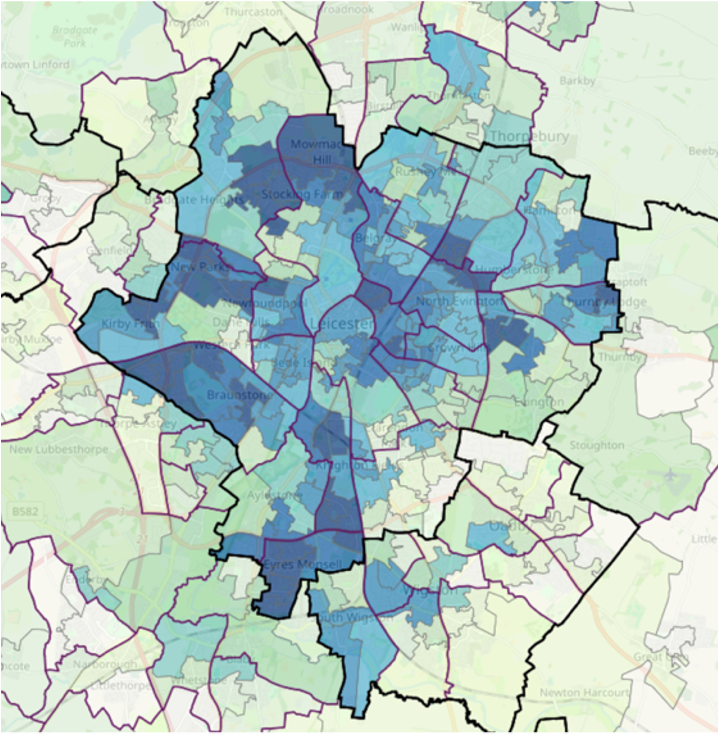
In this second phase, shown in Figure 7, the retrofit measures would total £39.6 billion, with an additional £11.9 billion expected in enabling works.
Of this, landlords would contribute £12.5 billion and £3.8 billion for the EPC upgrades and the enabling works respectively. £13.3 billion for the EPC upgrade and £4.0 billion for the enabling works would be grant-funded, while subsidised loans would cover the remaining share (£13.7 billion for the EPC upgrade and £4.1 billion for the enabling works). The loan element would ensure households outside the most deprived areas could still participate without prohibitive upfront costs, while delivering ongoing savings on energy bills.
[.fig][.fig-title]Figure 7: Phases 1 & 2 of Plan for Places[.fig-title][.fig-subtitle]Aggregate funding sources excluding for enabling and remedial works[.fig-subtitle][.fig]
[.notes]Source: Authors' calculations.[.notes]
[.fig][.fig-title]Figure 8: Phase 2 of Plan for Places[.fig-title][.fig-subtitle]Funding sources per household by tenure excluding for enabling and remedial works[.fig-subtitle][.fig]
[.notes]Source: Authors' calculations.[.notes]
We believe a zero-interest loan would be most effective in motivating households to participate in retrofit schemes by providing a significant annual cost saving.
The choice of interest rate substantially affects the financial incentive for participation. A zero-interest, twenty-year loan would yield average household savings of £232 per year for owner-occupiers in IMD deciles 3 and 4, and £173 per year in deciles 5 and 6. At four per cent interest, average annual savings fall to £177 for IMDs 3 and 4, and just £91 for IMDs 5 and 6. These savings reflect energy bill reductions minus loan repayments, and would be eroded for landlords by the requirement for private contributions.[84]
The new debt rule adopted by the Chancellor in 2024, targeting public sector net financial liabilities (PSNFL) instead of public sector net debt (PSND), allows for public borrowing to finance lending to households, but for expected defaults. If the interest received on these loans is greater than the yield on the associated gilt issuance then this is favourable to both the current budget deficit rule and thereby also the debt rule. Conversely, if the Government subsidises these loans by charging interest rates below gilt yields, this negative spread counts as current spending out of resourced departmental expenditure limits.
A programme of zero-interest, twenty-year loans financed at the prevailing ten-year gilt yield of 4.5 per cent would cost £361 million in interest subsidies. This assumes current market conditions, though the actual cost would vary with base rates over time and the Government could also structure this as index-linked debt. Alternatively, the Government could set loan rates at the prevailing yield rather than zero. This would eliminate the need for interest subsidies while still offering below-market financing. Another option would be to distribute the interest subsidy more evenly across the loan term. Since interest payments decline as the principal is repaid, the Government could provide higher subsidies in later years when the cost is lower, creating more consistent household savings over time.
However, we argue that subsidising zero-interest loans should be seen as an investment to ensure area-based programmes have widespread appeal and uptake, especially among households in IMDs 3–6 who are being asked to take on debt.
An added virtue of our approach is that by scaling the level of public subsidy according to LSOA-level deprivation, our approach avoids the complex administrative burden of targeting fiscal support based on household income, while still avoiding the fiscally costly deadweight loss associated with subsidising households who would invest regardless.[85] The reduced administrative cost and enhanced economies of scope from such an area-based approach would surely mitigate the costs of mistargeting subsidies to more affluent households living within relatively deprived LSOAs.
Without robust protections, public investment in the private rented sector will lead to the displacement of households it is designed to support. The Renters’ Rights Bill will provide baseline protections by abolishing Section 21 evictions, establishing more secure tenancies, strengthening tenants’ ability to challenge above-market rent increases and creating a landlord database.[86] But the Government’s commitment to raise Minimum Energy Efficiency Standards to EPC C by 2030 and commit additional funding to private landlords creates an imperative to establish additional tenant protections.
A national rent stabilisation framework should prevent landlords who receive public funding or are required to meet mandatory energy standards from passing retrofit costs onto tenants. Rent increases should be capped at the lower rate of inflation or wage growth, in line with recommendations from the Renters Reform Coalition.[87]
While the Renters’ Rights Act marks a significant step toward more secure tenancies, it still allows landlords to evict tenants who have complied with all terms of their agreement, with only four months’ notice, under certain prescribed grounds. Two grounds pose particular risks in the context of retrofit: eviction to undertake substantial redevelopment works (Ground 1A(4)) and eviction for sale (Ground 1A(1)).
First, landlords may choose to evict tenants under the substantial works ground rather than providing suitable temporary accommodation during disruptive retrofit works. While not all retrofit requires tenant relocation, deep retrofits can make homes temporarily uninhabitable. Without strong protections, landlords receiving public funding may find it simpler to evict tenants than to manage the disruption or cover the costs of alternative accommodation.
Second, landlords may use either the substantial works ground during retrofit or the sale ground shortly after completion to capture the uplifted value of an improved property. After tenants have endured the disruption of works — often subsidised with public funds — landlords can sell the retrofitted home at a premium or re-let at significantly higher rents following an eviction for sale.
To mitigate these risks, landlords receiving public funding for retrofit should face three requirements, echoing recommendations from Generation Rent.[88] First, they must provide suitable alternative accommodation rather than evict under the substantial works ground, with costs covered through the grant or loan funding package. Second, tenants should be granted protection from no-fault evictions under both the substantial works and sale grounds for a minimum of five years following the completion of publicly funded retrofit works.
Third, where landlords do sell a property within this period, they should be required to repay the grant value to the Home Improvement Corporation. This would remove the financial incentive to use retrofit as a route to property value uplift while still allowing landlords to sell where they have legitimate reasons to do so. The repayment requirement would apply only to the grant-funded portion of works, not to any landlord contributions or loan-funded elements.
The Renters' Rights Bill's civil penalty framework and rent repayment order system should be extended to cover violations of retrofit tenant protection measures, including breaching rent controls, failure to provide appropriate alternative accommodation during works and unlawful evictions following retrofit. The Private Rented Sector Database introduced under the bill should be used to track retrofitted properties subject to additional protections and flag landlords who have received public funding.
This system of national protections would ensure public investment in retrofit allows existing tenants to benefit from better housing conditions and lower energy bills. Rent stabilisation and anti-eviction measures are crucial to ensure that Home Improvement Corporations provide a better standard of living for existing communities rather than becoming vehicles for displacement.
Investment in retrofit should be leveraged to meet wider housing needs. Alongside preventing the displacement of tenants and protecting affordability, bringing empty homes back into use should be a central mission for Home Improvement Corporations. Local authorities can compulsorily acquire (CPO) long-term empty homes and bring them back into use. Home Improvement Corporations should be empowered to CPO empty homes, retrofit them to a high standard and convert them to social housing.
Achieving the full potential of this tool would require changes to the CPO process. Shelter has called for a package of CPO reforms to make the process more effective, speedier and less costly.[89] This includes changing government guidance to reflect that CPOs should be used as a tool to deliver social housing, rather than always as a last resort, and that properties should be assessed at existing use value, reflecting the level of disrepair.
Poor quality housing makes energy bills unaffordable, strains the NHS with avoidable illness and undermines pride in place. Addressing these problems while decarbonising England’s housing stock at an unprecedented scale will require new public capacity. Training more than a hundred thousand new workers, coordinating area-based schemes and reaching homes that are hard to treat or in poor condition cannot be achieved through a fragmented private construction industry — nor by local authorities working in isolation.
The Plan for Places builds on England’s history of public investment in improving private housing conditions, proposing new public institutions with the powers, capacity and democratic accountability to meet the scale of the retrofit challenge. The programme would deliver transformation across multiple dimensions:
By combining energy efficiency, clean heating and solar generation with wider improvements, tenant protections and reusing empty homes, Home Improvement Corporations would ensure that investment in net zero delivers not only carbon savings but healthier homes, secure employment and a fairer housing system. In doing so, they would turn climate policy from a perceived burden into a visible public good that materially improves people's lives.
[1] “Decarbonising home heating”, National Audit Office, 2024. Available here.
[2] “Shattered Britain”, More in Common, 2025. Available here.
[3] For a home to be considered “decent” it must contain no health or safety hazards, be in a reasonable state of repair, have reasonably modern facilities and services and provide a reasonable degree of thermal comfort.
[4] “English Housing Survey 2023 to 2024: Drivers and Impacts of Housing Quality”. Available here. Ministry of Housing, Communities and Local Government, 2025. Available here.
[5] “English Housing Survey 2022 to 2023: energy report”, Ministry of Housing, Communities and Local Government, 2024. Available here.
[6] “The Cost of Poor Housing in England”, Building Research Establishment, 2021. Available here.
[7] “English Housing Survey 2023 to 2024: Drivers and Impacts of Housing Quality”, Ministry of Housing, Communities and Local Government.
[8] “ECO4 Guidance: Delivery”, Ofgem, 2025, p. 82. Available here.
[9] Christian Jaccarini, “A Lost Decade for Home Insulation”, New Economics Foundation, 2024. Available here.
[10] Jillian Ambrose, “UK heat pump rollout criticised as too slow by public spending watchdog”, The Guardian, 2024. Available here; Richard Turkington, “Assessing changing public expenditure on private sector housing renewal and its impact since 2000”, Healthier Housing Partnership and Centre for Ageing Better, 2023.
[11] National Audit Office, Energy efficiency installations under the Energy Company Obligation, Department for Energy Security and Net Zero, 2025, p. 52.
[12] “General Election 2024: Voting Patterns in England by Deprivation and Community Need”, OCSI, 2024. Available here.
[13] “English Housing Survey 2023 to 2024: headline findings on demographics and household resilience”, Ministry of Housing, Communities and Local Government, 2024. Available here.
[14] Philip Leather, “Grants to Home-owners: A Policy in Search of Objectives”, Housing Studies, 2000, vol. 15, pp. 149–168.
[15] “English Devolution White Paper”, Ministry of Housing, Communities and Local Government, 2024. Available here.
[16] “Warm Homes: Local Grant — Successful local authorities”, Department for Energy Security and Net Zero, 2025. Available here.
[17] Richard Moore, Reconditioning the Slums: The Development and Role of Housing Rehabilitation, Polytechnic of Central London: 1980, p. 14.
[18] Ibid.
[19] “House of Commons Debates, vol. 17”, House of Commons, 15/5/1928.
[20] Moore, Reconditioning the Slums: The Development and Role of Housing Rehabilitation.
[21] Moore, Reconditioning the Slums.
[22] Christopher Watson and Richard Turkington, Renewing Europe’s Housing, Bristol University Press, 2014, p. 41.
[23] “Housing Policy — A Consultative Document”, Department of the Environment, 1977.
[24] “HLG 118/310: Housing improvement policy: possible future development”, The National Archives of the UK, 1964; A.E. Holmans, Housing Policy in Britain, Croon Helm, 1987.
[25] Michael Gibson and Michael Langstaff, An Introduction to Urban Renewal, Hutchinson: 1982.
[26] Leather, “Grants to Home-owners”.
[27] Philip Leather and Sheila Mackintosh, “Helping Home Owners to Help Themselves? Recent Developments in Housing Renewal Policy”, Policy & Politics, 1992, vol. 20; Philip Leather and Alan Murie, “The decline in public expenditure” in Peter Malpass (ed.) The Housing Crisis, Routledge, 1986.
[28] Leather, “Grants to Home-owners”.
[29] Brenda Boardman, Fuel Poverty: From Cold Homes to Affordable Warmth, Belhaven, 1991.
[30] “PREM 19/3598: Energy conservation: home insulation scheme: energy efficiency”, The National Archives of the UK.
[31] “Home Improvement: A New Approach”, Department of the Environment, 1985.
[32] Leather, “Grants to Home-owners”.
[33] Philip Leather and Sheila Mackintosh, “Maintaining home ownership: The evolution of home improvement agencies in the United Kingdom”, Scandinavian Housing and Planning Research, 1994, vol. 11, pp. 39–53.
[34] Stuart Hodkinson, “Housing Regeneration and the Private Finance Initiative in England: Unstitching the Neoliberal Urban Straitjacket”, Antipode, 2010, vol. 43, pp. 358–383.
[35] Watson and Turkington, Renewing Europe’s Housing.
[36] Philip Leather, Brendan Nevin, Ian Cole and Will Eadson, “The Housing Market Renewal Programme in England: development, impact and legacy”, Centre for Regional, Economic and Social Research, 2012. Available here.
[37] “Evaluation of the Carbon Emissions Reduction Target and Community Energy Saving Programme”, Ipsos MORI, 2014. Available here.
[38] “Assistance with home repairs/improvements”, House of Commons, 2017. Available here; “Spending Review 2010”, HM Treasury, 2010. Available here.
[39] “Chancellor’s Plan for Jobs to help the UK’s recovery”, HM Treasury, 2020. Available here; “Spring Statement 2022”, HM Treasury, 2022. Available here.
[40] A.E. Holmans, Housing Policy in Britain, Croon Helm, 1987.
[41] Elizabeth Monck and Gillian Lomas, “Housing Action Areas: Success and Failure”, Centre for Environmental Studies, 1980.
[42] John Short and Keith Bassett, “Housing Action Areas: An Evaluation”, Area, 1978, vol. 10, pp. 153–157.
[43] Monck and Lomas, “Housing Action Areas: Success and Failure”.
[44] Housing Act 1974, c. 44.
[45] Monck and Lomas, “Housing Action Areas: Success and Failure”, p. 96.
[46] Monck and Lomas, “Housing Action Areas: Success and Failure”.
[47] “AT 88/173: Housing investment programmes: general file”, The National Archives of the UK, 1982.
[48] “Renewal Strategy: Sixth Annual Review”, Leicester City Council, 1982.
[49] “HL Deb, vol. 486”, Hansard, 1987.
[50] Andrew Thomas, Housing and Urban Renewal: Residential Decay and Revitalisation in the Private Sector, George Allen and Unwin, 1986.
[51] “HLG 118/4299: Housing improvement expenditure: ‘enveloping’; development of policy; consideration of report evaluating enveloping schemes; draft circular”, the National Archives of the UK.
[52] “T 493/75: Enveloping schemes: improvement of the older housing stock”, The National Archives of the UK.
[53] Monck and Lomas, “Housing Action Areas: Success and Failure”.
[54] Ibid.
[55] Tim Mason, “Inner City Housing and Urban Renewal Policy: A Housing Profile of Cheetham Hill, Manchester and Salford”, Centre for Environmental Studies, 1977.
[56] Elizabeth Monck and Gillian Lomas, “Publicity and Public Participation in Housing Action Areas”, Centre for Environmental Studies, 1980.
[57] Monck and Lomas, “Housing Action Areas: Success and Failure”.
[58] Brett Christophers, The New Enclosure: The appropriation of public land in neoliberal Britain, London: Verso, 2018.
[59] Mark Raco, “A Step Change or a Step Back? The Thames Gateway and the Re-birth of the Urban Development Corporations”, Local Economy, 2007, vol. 20, pp. 141–153.
[60] Jennifer Williams, “What lies behind England’s mayoral development corporations”, Financial Times, 2023. Available here.
[61] Cara Jenkinson, “Creating good local retrofit jobs — a role for local Works and Training Organisations?”, Ashden Climate Solutions and MCS Foundation, 2025. Available here; Charlotte Ravenscroft, “How councils are tackling the retrofit skills gap”, Gatsby, 2025. Available here.
[62] Meghan Owen, “Thousands more construction workers needed to meet housing targets”, BBC, 2025. Available here.
[63] Linda Clarke and Melahat Samin-Dikmen, “City Building (Glasgow): Inspirational model low energy construction and direct labour”, Scottish Left Review, 2019. Available here.
[64] Jenkinson, “Creating good local retrofit jobs”.
[65] Pablo Sendra, “The ethics of co-design”, Journal of Urban Design, 2024, vol. 29. Available here.
[66] “Written evidence submitted by People Powered Retrofit”, People Powered Retrofit, 2020. Available here.
[67] Matthew Forbes Milloy, “Neighbourhood Led Retrofit”, Retrofit and Refurb, 2024. Available here.
[68] “English Housing Survey 2023 to 2024: Drivers and Impacts of Housing Quality”, Ministry of Housing, Communities and Local Government.
[69] “Decent Homes Standard Interim Impact Assessment”, Ministry of Housing, Communities and Local Government, 2025. Available here.
[70] Turkington, “Assessing changing public expenditure on private sector housing renewal and its impact since 2000”, Healthier Housing Partnership and Centre for Ageing Better.
[71] “DEEP Report 1: Synthesis”, Department for Energy Security and Net Zero, 2024. Available here.
[72] “Financing home improvements: local authority case studies”, Centre for Ageing Better, 2023. Available here; “Retrofit Explained: Priority Neighbourhood Approach, Leeds City Council”, UK100, 2024. Available here.
[73] “UK private rented sector: 2018”, Office for National Statistics, 2019. Available here.
[74] “Household Energy Efficiency: Great Britain, Data to December 2024”, Department for Energy Security and Net Zero, 2025. Available here.
[75] Christopher McFadden, “How much does external wall insulation cost in the UK”?, The Eco Experts, 2024. Available here; Tom Gill, “Internal wall insulation costs”; The Eco Experts, 2024. Available here.
[76] Zoe Conway, “30,000 homes fitted with botched insulation under government schemes, ministers admit”, BBC, 04/09/2025. Available here.
[77] Justine Piddington et al., “The Housing Stock of the United Kingdom”, BRE Trust, 2018. Available here.
[78] “Fuel Poverty: a framework for future action”, Department of Energy and Climate Change, 2013. Available here.
[79] “Kirklees Warm Zone Scheme: End of Project Process Evaluation Report”, Kirklees Council, 2011. Available here.
[80] “Financing home improvements: local authority case studies”, Centre for Ageing Better. Available here.
[81] Assuming an average cost of £10,000 to £20,000 per home, with private landlords contributing half of project costs after their first property.
[82] EPC data is not available at the level of Lower Super Output Area (LSOA), so we assume that each LSOA’s share of ratings below EPC C is equal to the encompassing Middle Layer Super Output Area (MSOA). “Energy efficiency of Housing, England and Wales, middle layer super output area”, Office for National Statistics, 2022. Available here.
[83] “Improving the energy performance of privately rented homes: options assessment”, Department for Energy Security and Net Zero, 2025. Available here.
[84] This is based on the difference between the average £350 per household in energy bill savings from upgrading to EPC C and the annual loan payment based on the £5,900 average cost of such an upgrade, in combination with the relevant split between grant and loan support (60:40 for IMD deciles 3 and 4 and the reverse for deciles 5 and 6). In the absence of EPC rating data for combinations of housing tenure and local deprivation, we assume for simplicity that the distribution of EPC ratings within each IMD decile is equal across tenures. Savings available to social landlords would depend on how they finance their 50 per cent contribution. Similarly, for a private landlord in Phase 2, not receiving any grant or public loan support and relying entirely on private borrowing, an interest rate of 1.75 per cent on a twenty-year loan would be sufficient to offset the £350 annual energy efficiency savings.
[85] Andy King, Virginia Sentence, Lauren Milner and Ellen Brett, “The UK's Warm Homes Plan: Options for Public Loan Schemes”, Centre for Economic Transition Expertise, 2025. Available here.
[86] “Guide to the Renters’ Rights Bill”, Ministry of Housing, Communities and Local Government, 2025. Available here.
[87] “A Roadmap for Reform — the Renters’ Reform Coalition’s Plan for Reforming Private Renting”, Renters’ Reform Coalition, 2024. Available here.
[88] “Generation Rent response to the 2025 PRS MEES consultation”, Generation Rent, 2025. Available here.
[89] Sam Bloomer et al., “Home Again: A 10-City Plan to rapidly convert empty homes into social rent homes”, 2024. Available here.