We Aren’t the Champions: Why UK Venture Capital Is Failing to Scale Domestic Innovation
Summary
In April 2026, Ineffable Intelligence, a London-based AI start-up, made the news with a fundraising record.[1] The company raised a $1.1 billion seed round at a valuation of $5.1 billion. This was the largest first funding round ever raised by a European start-up. At this point, the company had no product and no revenue. What it did have was a thesis about reinforcement learning and a founder, David Silver, whose track record at DeepMind made investors willing to write billion-dollar cheques on conviction alone. The round was led by Sequoia Capital, a leading US venture capital firm. Nvidia and Google invested alongside them. This story is emblematic of UK tech: world-class research, big ambitions, and US capital calling the shots from day one.
Ineffable Intelligence might be held up as evidence that the UK could produce a globally significant AI company. This briefing sets out to show why that trajectory, from a UK perspective, is far less promising than it appears. Indeed, the broader pattern of start-up financing makes the emergence of a British tech champion unlikely.
That it is unlikely is because the intentions and outcomes of UK innovation policy diverge. On paper, all of the ingredients for strong innovation are there: the government runs various schemes that encourage start-up investment. British universities produce world-leading research. The country has produced companies like DeepMind, whose work helped set off the current generative AI boom. Moreover, funding levels for start-ups saw record highs during the 2010s. In short, there is plenty of money flowing into innovation driven by capable people. So, why is it that the UK does not have tech companies that seriously challenge US Big Tech?
The answer, we argue, lies in the details of start-up financing and ownership. This briefing shows how the UK venture capital (VC) market has become financially subordinated to the US, and outlines what this means for innovation policy.
This briefing finds that:
- UK start-ups are dependent on US capital. While UK VC firms dominated early-stage funding in the early 2010s, they have since been overtaken by US investors for the largest VC-backed UK tech firms. By the end of the decade, US VC firms and “non-traditional” investors such as private equity firms and hedge funds had become the dominant source of capital for these UK start-ups, particularly at the late stage where large sums are needed to scale.
- UK venture capitalists are dependent on US markets. The top UK VC firms make the majority of their large investments not in UK start-ups but in US-based companies. UK start-ups, meanwhile, overwhelmingly make money for their investors by being acquired by US and European corporations. The most technologically advanced British companies are bought by US tech giants (e.g., Google’s acquisition of DeepMind), while the firms that do list in London tend to be laggard platforms copying US business models.
- More money will not fix this problem. Current policy efforts to channel more money into venture capital will not overcome these structural dependencies. Instead, they are likely to concentrate more wealth and power among a small elite of fund managers while doing little to create British tech champions or improve outcomes for society at large.
This briefing draws on an analysis of PitchBook data on the investor composition of the 38 largest UK-based and VC-backed tech companies by exit deal value between 2010 and 2023, and the top 46 British unicorns as of December 2023. This includes data on approximately 1,000 investors making 1,685 investments across all funding stages. However, this means the briefing is based on a relatively small sample of the largest British tech start-ups (see our methodological note at the end for more details).
Overcoming these dependencies requires a fundamental rethinking of what and whom innovation is for. While this is a Herculean effort, the recent return of industrial policy and decoupling from US tech dependence in Europe suggest that such change is far from impossible.
A Primer on UK Venture Capital
In the decade following the 2008 Global Financial Crisis, expansive monetary policy and ultra-low interest rates created a favourable environment for asset appreciation. This made bonds (debt issued by governments and corporations and typically a popular investment for steady returns) relatively less attractive. Investors instead moved their money into funds that allowed them to capitalise on quickly appreciating assets like real estate, tech stocks — and start-ups. This was a boon to venture capitalists, the investors who raise and manage funds for start-up investment.
Between the post-2008 slump and the 2021 peak, VC investment in the UK increased more than sevenfold to £5 billion.[2] This coincided with the maturation of a new business model, which aimed for the “disruption” of existing sectors in the economy, with asset-light, fast-scaling start-ups to become a new platform replacing legacy companies. Often termed the rise of the platform economy, this alliance between venture capitalists and platforms saw the transformation of sectors like transport, hospitality, news and health, among many others. How did this transformation unfold in detail, and how important were venture capitalists in the process?
Successful start-ups progress through different stages, each requiring fundraising by selling equity to venture capitalists. The earliest is called the “seed” stage, when the company consists of hardly more than a small team and a slide deck with an idea. The next stage, called “Series A”, is when the start-up seeks to achieve product-market fit, followed by “Series B” for expansion. These first three stages are typically grouped as “early-stage” VC investing, while Series C+ are considered “late-stage”. During various rounds of funding, the company founders (who start with 100 per cent ownership) sell off ownership shares to investors. The value of the start-ups is expected to multiply throughout this process, making share owners a fortune — but for that moment, only on paper. Share owners only realise their capital gains when the start-up “exits”, either by listing on a stock market through an initial public offering (IPO) or by getting acquired by another company.
Venture capital is a business of extremes. While other types of investor may seek to create a balanced portfolio of investments, venture capitalists know that most of their investments will fail. Their goal is to invest in a handful of start-ups that are breakout successes and which become so valuable that they can return the entire fund multiple times. Returns in venture capitalists’ portfolios follow a “power law” distribution: a very small number of investments generate the bulk of returns, while most investments generate meagre or no returns at all. Ironically, the returns in the venture capital sector are just as skewed as those of start-ups: a very small number of VC firms generate the bulk of returns, while most VC firms generate meagre or no returns at all.[3]
This extreme distribution of returns allowed the most successful VC firms to establish themselves as a top-tier group. By building a track record of profitable exits, top VC firms were able to raise more capital for their next investment funds. As money flowed in from institutional investors and start-up investing became more and more crowded throughout the 2010s, increased financial firepower through larger funds meant that these firms remained competitive in start-up deals. Closing competitive deals was further aided by top firms’ good reputations. In what is known as the “halo effect”, start-up founders want to hang out with “winners” who can point to a successful exit track record. Conversely, an investment by a top-tier firm might also signal a start-up’s legitimacy to other investors, leading to higher valuations, better access to networks for follow-on funding rounds and high-skilled labour. Overall, this is a dynamic where early success begets future success.
This self-reinforcing loop concentrates capital at the very top of the UK VC sector. Table 1 shows the top ten UK VC firms ordered by activity — i.e.by their total number of investments. Firms such as Accel Partners London, Atomico, Balderton Capital and Index Ventures exemplify the concentration of capital in the sector, with assets under management in excess of $4 billion.
[.fig]Table 1: Top 10 UK-Based VC Firms by Assets Under Management[.fig]
[.notes]Source: Author analysis based on data provided by Pitchbook. Note: Shading denotes the concentration of capital among the top four firms.[.notes]
What do this constellation and its dynamics mean for innovation in the UK? Why do we not have national tech champions despite all this money? We explore these questions by following the start-up journey, from fundraising to investor spending and eventual “exit”.
Where Do UK Start-Ups Get Their Funding From?
Start-ups need funding for years before they can exit. Where this funding comes from depends on the maturity of the startup and the corresponding funding stage. What these stages look like has fundamentally changed between the early and late 2010s. While UK VC firms dominated early-stage and late-stage investment in the early 2010s, they ceded this position to US VC firms towards the end of the decade. Table 2 illustrates this change, which becomes visible through the comparison between our two data samples. The median Series A deal year between both samples differs by seven years (2012 versus 2019), representing two consecutive cycles of VC investments in the UK.
[.fig]Table 2: Overview of Investors in UK Exit and Unicorn Start-Up Firms[.fig]
[.notes]Source: Author analysis based on data provided by Pitchbook.[.notes]
During the first VC cycle of “exit” firms, US VC firms had little competition from other investors and significant opportunities in their home market. US VCs made healthy returns from the social media exit wave of firms such as Zynga, Instagram, Facebook, LinkedIn and Twitter between 2011 and 2014.[4] However, during the second, “unicorn” cycle, “non-traditional” investors including private equity firms, hedge funds and growth investors such as Tiger Global and SoftBank rapidly increased their investments in US tech start-ups. This led to increased competition in the US VC market in Silicon Valley and other US tech clusters.
Following the increasingly fierce competition among investors at home, US VC firms increased their investments in overseas markets such as the UK. US VC firms became the dominant investors in early- and late-stage funding deals of UK “unicorn” firms because they had raised larger funds and could pay higher prices when closing deals, thereby outcompeting their British counterparts. Moreover, a significant share of UK late-stage investments (around 14.2 per cent) in “unicorns” was made by US-based “non-traditional” investors including private equity firms, hedge funds and corporate VC outlets of US incumbent tech firms.
This push of US VC capital was met with a pull from late-stage UK start-ups. Increased competition was not limited to investors. Start-ups likewise vied for dominance in an increasingly bubbly investment climate. Start-ups follow the “hypergrowth” principle seen by investors as a necessary precondition for a profitable exit deal.[5] In the 2010s, emerging platforms epitomised this principle by targeting the same market and spending lavishly on customer acquisition to become the monopolist. Infamous examples are ride-hailing, food delivery and, towards the very end of the boom, fast grocery delivery. In this sense, UK-based “unicorn” companies became dependent on growth capital investments to finance rapid corporate expansion.[6] This dependency on US growth capital was exacerbated by a decreasing number of UK investors seeking to invest in late-stage deals, widening an equity gap at late stage — US investors could simply put up more money for financing than their UK counterparts.
In sum, by the end of the last decade, US VCs overtook UK VCs as the top provider of capital to UK start-ups. To some extent, UK start-ups could not have completed their late-stage expansion plans without this capital, forming a relationship of dependency on overseas capital.
Where Do Top UK VCs Invest?
Strikingly, the top ten UK-based VC firms[7] made most of their large investments in foreign companies, and in particular US-based start-ups.[8] This is true across both the early-2010s exit and late-2010s unicorn firm samples, where US investments constitute 57 per cent and 50 per cent, while the UK only accounts for 14 per cent and 12 per cent, respectively (see Table 1). While our samples only include the largest exits (which primarily take place in the US) and highest-valued start-up firms (which are also primarily located in the US), this finding is still significant because it highlights the continuous importance of the US deal pipeline for top-tier UK VC firms.
Why do UK VCs invest in the US? There are the obvious reasons: the US VC market is by far the largest globally where the most profitable start-up financing and exit deals are taking place. It represents the leading edge of technological innovation in global capitalism. However, when UK VCs invest in US start-ups, they struggle to land investments with leading-edge firms. This is because of the fierce competition in US VC, which is dominated by highly capitalised US top-tier firms such as Sequoia Capital and Andreessen Horowitz. This makes it difficult even for top-tier UK VC firms to get access to deals with the most promising and highest-priced US “unicorn” tech firms. In fact, out of the top ten UK VC firms, only Index Ventures and Atomico managed to invest in at least one of the top 20 US-based unicorn companies.[9] Further, top-tier UK VCs rarely lead early investment rounds of top US unicorns, which tend to be the most profitable investments. Rather, they co-invest in large, late-stage rounds among numerous other investors, which tend to be less profitable. Still, investing late and/or predominantly in laggard firms can be highly profitable as the fund return data cited above suggests.
[.fig]Table 3: Overview of Exit and Unicorn Investments by Country for Top 10 UK VC Firms[.fig]
[.notes]Source: Author analysis based on data provided by Pitchbook.[.notes]
Could a UK VC firm remain at the top with a mostly domestic portfolio and mostly domestic exits? Data from Balderton Capital and Octopus Ventures suggest this is possible. Octopus had all four global large exit investments in UK-based start-up firms (e.g. Zoopla), while UK exits accounted for 50 per cent of Balderton’s total large exit investments. However, other firms such as Atomico and Index Ventures are much more outward-oriented and invest a significant share of capital abroad. Out of Atomico’s 100 largest deals, 49 were in European countries (excluding the UK) while 32 were in US-based start-up firms, showing that the firm is more oriented towards mainland Europe and the US. Index Ventures is even more US-focused: 53 per cent of its largest investment deals are in US start-up firms.
In sum, the top-tier UK VC firms make a significant share of investments in deals with US-based laggard start-up firms to realise capital gains via exit deals in the US. Giving money to UK VCs does not mean that all that money will be spent in the UK. In fact, if UK VCs did that, they might not be able to survive financially, making the creation of a “homegrown” British tech champion a precarious affair.
Where Do UK Start-Ups Exit?
The general trend is that the largest exit transactions of UK-based start-up firms do not take place in the UK (see Figure 1). Rather, they involve acquisitions by US and European incumbent corporations and investors. In total, the largest two categories of exit deals are acquisitions by US and European incumbent companies (39 per cent and 26 per cent, respectively), particularly in cutting edge sectors such as AI, fintech and biotech. Hence, when it comes to the largest exit transactions which are vital for VC firms to generate outsized returns, the UK VC market is dependent on exit transactions that take place abroad, and predominantly on acquisitions made by US Big Tech incumbents.
[.fig][.fig-title]Figure 1: Overview of UK Exit Deals and Exit/Investor Country[.fig-title][.fig-subtitle]Left: number of exit deals by type and investor country; Right: number of exit deals as a share of the total[.fig-subtitle][.fig]
[.notes]Source: Author analysis based on data provided by Pitchbook.[.notes]
Beyond obvious differences in the size of US and UK stock markets and mergers and acquisitions (M&A) markets, a big reason why there are so few VC-backed tech exits in the UK is the absence of an established UK tech sector. With few exceptions such as Arm plc, UK tech consists of small tech firms, founded after the year 2000 (see Figure 2). Even the Cambridge-based Arm plc, held up by the government as the British “crown jewel”, is listed on the US tech stock market NASDAQ and 88 per cent owned by the Japanese tech conglomerate SoftBank. The absence of large UK tech incumbents means UK acquisitions have remained an insignificant exit route for UK start-ups and British VCs seeking to realise capital gains.
[.fig][.fig-title]Figure 2: Top 20 UK VC-Backed Unicorn Companies as of December 2023 [.fig-title][.fig-subtitle]VC-backed unicorn companies by company post-valuation and primary industry code[.fig-subtitle][.fig]
[.notes]Source: Author analysis based on data provided by Pitchbook. Note: Financial software, Other Commercial banks, Brokerage and Other insurance are grouped under FinTech.[.notes]
Even though M&A dominates in the largest exit deals between 2010-2023, some start-ups still pursued the traditional exit route via an IPO on a stock exchange. The UK-based tech firms that exited via IPOs in London were mostly platforms for delivery (e.g. Deliveroo, Just Eat), rental/property (e.g. Zoopla) or lending services (e.g. Funding Circle) — companies whose models are not the development of the most advanced technologies but which copied business models from more mature US platform firms to operate mainly in markets outside the US. Conversely, the most technologically advanced UK start-ups rarely mature to a big exit in the UK. A prime example is DeepMind, founded in London in 2010 and acquired by Google in 2014.
The UK market, in other words, mainly features “second-class” VC exits of laggard tech firms which command lower equity valuations than their US competitors (see platforms listed above) or promising start-ups that are bought early in their lifetime by US incumbents at comparatively low prices —Google acquired DeepMind for “only” $650 million in 2014. It remains to be seen how fintech unicorns fare in this regard, as half of the UK unicorn firms today operate in this sector. Both acquisitions by banking incumbents and the rise of a challenger bank are imaginable at this point.
In sum, even though top-tier UK VC firms make substantial investments in British start-ups, the largest of those primarily exit via acquisitions by US incumbents. UK start-ups depend on foreign markets to exit. The top-tier UK-based VC firms are, to some extent, dependent on US start-up deals, US investors and US exit routes to realise outsized capital gains. These gains, in turn, have led to the concentration of capital within the UK VC market at the very top.
Existing Policy for Subordinated UK VC
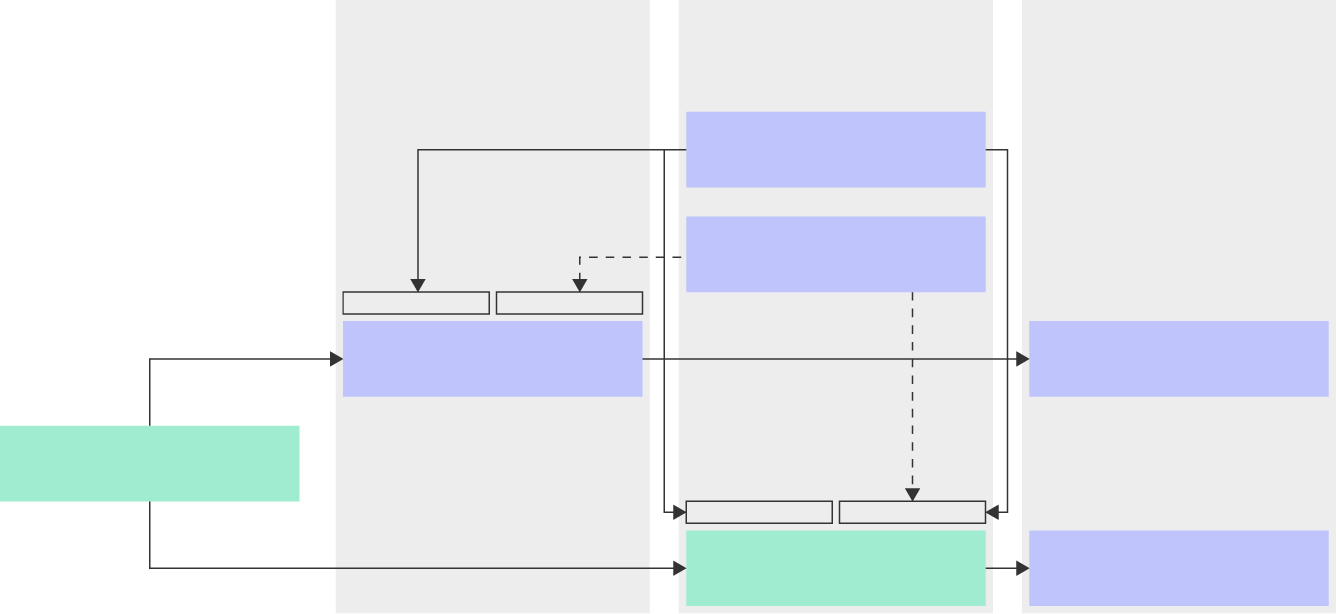
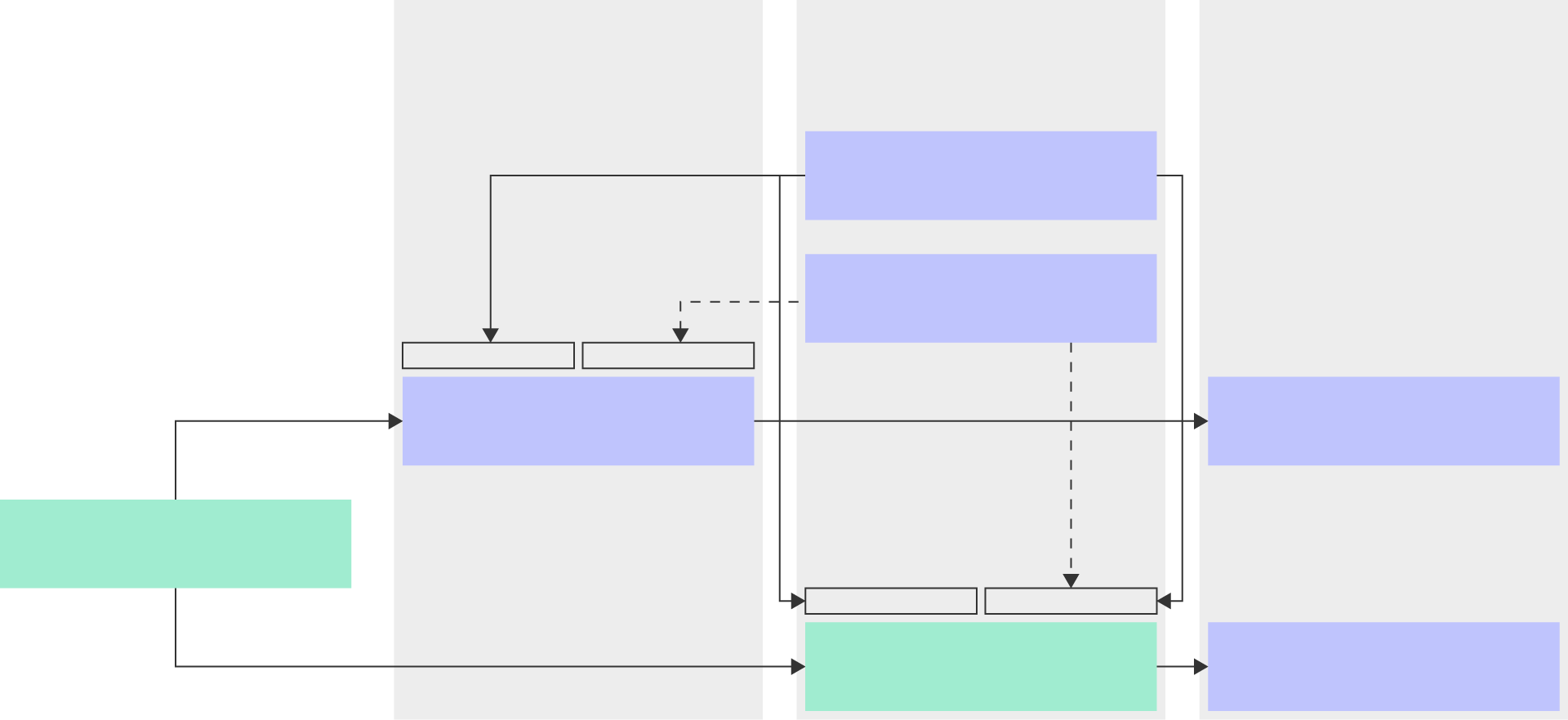
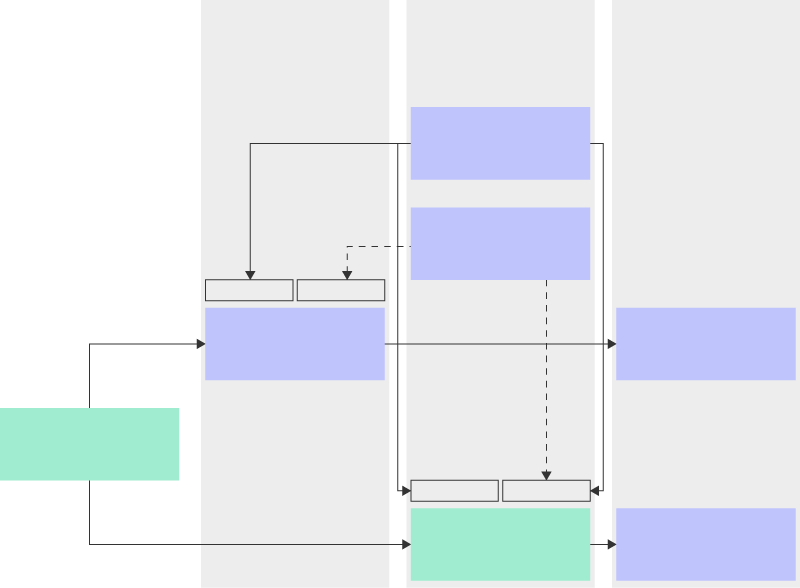
Innovation policy is more than a strictly national project. As we have seen, international financial flows play an important role both on the investor and investee side. This international sphere is not a level playing field: the UK VC market has become financially subordinated to its US counterpart, meaning that it depends on the US for its functioning. This is evident in three dimensions: UK VCs making start-up deals in the US, US VC’s growth investments in UK start-ups and US-based exit transactions.
This matters for our understanding of the politics of UK innovation finance, and more specifically for the question of how the financing of innovation should be organised. Policymakers across the party spectrum perceive channelling more funds into British VC as a key solution to reigniting growth in the stagnant UK economy and fostering advanced technological development in AI independently of the US. Given UK VC’s subordination, where would this lead us?
[.fig][.fig-title]Figure 3: Three Dimensions of Financial Subordination of UK VC[.fig-title][.fig-subtitle][.fig-subtitle][.fig]
First dimension
Second dimension
Third dimension
US start-up deals
US growth capital
US exits
US VC firms
US “non-traditional”
investors
Early stage
Late stage
US start-up firms
US exit deals
UK VC firms
Early stage
Late stage
UK start-up firms
US exit deals
First dimension
Second dimension
Third dimension
US start-up deals
US growth capital
US exits
US VC firms
US “non-traditional”
investors
Early stage
Late stage
US start-up firms
US exit deals
UK VC firms
Early stage
Late stage
UK start-up firms
US exit deals
First dimension
Second dimension
Third dimension
US start-up deals
US growth capital
US exits
US VC firms
US “non-traditional”
investors
Early stage
Late stage
US start-up firms
US exit deals
UK VC firms
Early stage
Late stage
UK start-up firms
US exit deals
[.notes]Source: Authors' analysis.[.notes]
Since the 1980s, successive governments have sought to foster the financing of homegrown British tech start-ups. A central point of reference for lobbyists and policymakers was the so-called “equity gap”: small and medium-sized enterprises (including start-ups) purportedly lacked financing to get operations going and grow because existing financiers (especially banks) were unwilling or unable (e.g. because of their risk profile) to lend to these entities.
The first steps towards closing the gap were government support schemes to incentivise start-up investment. Noteworthy here are the Business Start-Up Scheme in 1981, the Business Expansion Scheme in 1983, Venture Capital Trusts, Regional Venture Capital Trusts, Enterprise Capital Funds, the Enterprise Investment Scheme (EIS) introduced in 1995 and the Seed Enterprise Investment Scheme (SEIS) in 2012. Most of these schemes allowed for tax deductions on capital invested through these investment vehicles. According to one industry body, EIS and SEIS alone raised £34 billion for investment in 59,000 businesses.[10]
The introduction of these schemes was accompanied by successive reductions in capital gains tax — a hallmark of supply-side reform. The capital gains tax indexation allowance in 1982, its rebasing in 1988, the taper relief in 1998 and the eventual abolition of the taper relief in favour of an overall decrease in capital gains tax in 2008 successively lifted equity investors’ tax burden. This made a decisive difference for investors focused on the fast appreciation of equity investments, in contrast to debt-based forms of financing.
The latest iteration of this longstanding push to close the equity gap centres on pension capital. The Mansion House Accord, signed in May 2025 by seventeen of the UK’s largest workplace pension providers, commits signatories to invest at least ten per cent of their defined contribution default funds in private markets by 2030, with at least half of that allocated to UK assets.[11] The providers involved manage vast portfolios of defined contribution pensions, placing total assets in scope at around £252 billion. The government has framed this as a way to improve returns for pension savers and simultaneously channel investment into UK science, technology and infrastructure. The British Business Bank’s new British Growth Partnership has already attracted initial commitments worth £200 million from institutional investors, intended to support start-up growth.[12]
The logic is familiar: if start-ups are struggling to grow, the problem must be insufficient capital, and the solution to find new pools of money. But the analysis presented in this briefing suggests that the problem is not simply about how much money flows into venture capital. It is about where ownership is being acquired, who profits from it and what structural constraints prevent the UK from producing tech companies that remain there. On each of these fronts, more capital alone does not solve the underlying problem. In fact, it risks making things worse.
More money, same winners
Incentivising institutional investors to invest in venture capital will likely lead to an even more pronounced concentration of capital under management among a small top tier of UK VC funds. Returns in venture capital are already highly skewed. A very small number of funds generate the bulk of returns, while most funds deliver modest or no returns at all. Pension funds, bound by fiduciary duty and under pressure to demonstrate value for money, will naturally seek to place their capital with the best-performing VC firms. This means that an influx of pension capital would flow disproportionately towards the same top-tier firms that already dominate the sector.
The concentration of capital among top funds translates directly into a concentration of wealth among their general partners, the individuals who manage these firms. The typical compensation structure in venture capital means that two per cent of assets under management are charged as an annual management fee, and general partners keep 20 per cent of the profits of the fund. More capital flowing into the sector enriches a relatively small group of people. Whatever the broader economic merits of start-up investment, an indiscriminate increase in capital allocated to VC is first and foremost a wealth transfer to this elite group.
More capital will not make UK start-ups exit in the UK
More capital to close the equity gap will not be sufficient for the UK VC market to overcome its subordinate position relative to the US, and by itself does not make the emergence of UK national tech champions more likely.
The previous sections of this briefing have shown that the problem is not a lack of money flowing into start-ups. VC investment in the UK increased more than sevenfold between the post-2008 slump and the 2021 peak. Funding levels for AI have been at record highs. Yet, the UK still does not have tech companies that seriously challenge US Big Tech. If a sevenfold increase in funding did not close the supposed funding gap, it is worth asking what another round of capital injection would achieve.
A significant constraint on UK tech development is not at the funding stage but at the exit stage. Even if more capital is channelled via UK VC firms into early- and late-stage deals, those start-ups still depend on US incumbents and stock markets to exit. As we showed earlier, the largest exit transactions of UK start-ups are overwhelmingly acquisitions by US and European corporations. The UK-based firms that do manage to list in London tend to be platforms copying more mature US business models, operating outside the US market.
This exit dependency is not an accident nor a temporary market condition. It reflects the absence of a large domestic tech sector in the UK. Without major British tech incumbents that could acquire promising start-ups, and without a stock market environment that supports large tech IPOs, the most valuable UK start-ups will continue to leave. No amount of additional pension capital alters this structural reality. In fact, pumping more money into UK start-ups that eventually exit via US acquisitions may accelerate the transfer of British innovation to US ownership.
UK VC money does not stay in the UK
The analysis in this briefing also reveals something that should give pause to anyone hoping pension capital allocated to UK VC firms will be spent domestically. The top UK VC firms make the majority of their large investments (at least when it comes to the biggest deals) in US-based start-ups, not British ones. US investments constitute over half of both exit and unicorn portfolios for the top ten UK-based firms. This is not a quirk of individual firm strategy but reflects the structural reality that the US is by far the largest and most profitable VC market globally. UK VC firms invest there because they need to in order to generate the returns their investors expect.
If UK pension funds allocate capital to top-tier UK VC firms, a significant portion of that capital will be invested in US start-ups. This would fund US innovation, generate exit proceeds in US markets and enrich US founders and acquirers alongside the UK-based fund managers. This is not necessarily a problem for pension fund returns, however, it directly undermines the policy rationale that pension capital in VC will drive UK growth and help create British tech champions.
Owning Innovation
The absence of UK tech champions points to a deficiency in the UK’s current VC-driven system of financing innovation. As this briefing has shown, it is highly questionable whether pumping more money into UK VCs is going to change this. If more growth capital is provided by pension funds to UK VC firms, a significant share will likely be invested in foreign start-ups in the US or Europe. But even if more growth capital were to be invested directly into British tech start-ups, this would not necessarily mean that they grow into UK tech champions. More money gives start-ups more “runway” to grow and increase their valuations. When the time to exit comes, exit deal volumes might increase, netting VCs higher returns. Yet there is no guarantee that these exits will happen in the UK.
On the contrary, higher valuations of British growth companies will make it even more (not less) likely that UK tech firms seek exit deals in the US. This is because of the imbalance between the UK and US capital markets: New York stock exchanges offer higher levels of capital and liquidity which support higher tech valuations, while only US Big Tech and other highly capitalised US incumbents can pay for massive acquisition deals of British VC-backed tech firms. Increased valuations fuelled by more pension fund money might even put these start-ups even further beyond the reach of potential UK acquirers. In short, the problem is structural: UK VC is geared towards maximising returns from exit deals while being subordinated to the US.
The stakes of British start-ups exiting overseas are clear: The UK has a harder time in building tech ecosystems when the most promising companies routinely relocate. Meanwhile, repeated overseas exits have also cemented the cultural narrative that the very best start-ups make it to the US. This is an extension of the “halo effect” outlined earlier: winners want to hang out with winners, and they are all in the US. We invoked DeepMind throughout this briefing as an example of this dynamic. Despite the Google acquisition, co-founder Demis Hassabis kept the lab in London and upheld the idea that not all cutting-edge AI research happens in California. When in August 2026, Hassabis was given the new roles of DeepMind chair and Alphabet chief scientist, fears mounted that DeepMind was fully retreating to the US after all. A change in ownership is the first step, the movement of top talent — which often spin-off new tech ventures — reinforces the semi-peripheralization of the British tech ecosystem. Former DeepMind employees have raised $55 billion for their new start-ups, but only $5 billion of those were raised in the UK.[13]
If the government was serious about preventing the sell-offof the leading British tech companies to US Big Tech or other foreign investors, it would not only try to increase the inflow of capital but also use the National Security and Investment Act 2021 to prevent foreign acquisitions in UK tech.[14] This is currently the only legal tool the government could use to block foreign acquisitions. Even though it covers acquisitions in AI, advanced materials, computing hardware, robotics and space technology, and could thus be applied to foster economic or technological independence, so far, it has only been used on national security grounds. While this regulatory tool would not prevent UK start-up firms from moving to or listing in the US, it could be a first step in disentangling UK tech from US Big Tech and finance.
However, as outlined in this briefing, the UK’s dependencies on the US run deep and are, in many ways, a legacy of the ways in which the UK has been integrated into the post-WWII order of global capitalism under US hegemony. While starting to overcome these dependencies would require significant state intervention, the UK government has pursued the opposite political agenda: courting US Big Tech to invest more in the UK — and making the latter even more dependent — as demonstrated by the UK-US Tech Prosperity Deal signed during Donald Trump’s visit in 2025. In short, the government has limited means to pursue VC independence — a precondition for the much sought-after British tech champions — but also no willingness to act.
To be clear, we are not advocating for a new British state-capitalist project to seek technological independence via intervening in the financing of innovation. If the government’s innovation policy was genuinely intended to improve the lives of working people (as its own framing of pension reform suggests), then it would need to grapple with questions of who should own and control the process of financing and developing novel technologies, not just channelling more capital into the current, deficient and contradictory system of profit-driven VC. No matter how much capital flows into this system — even if it were independent of the US — it would always seek to finance hypergrowth start-ups geared towards maximising capital gains from exit deals for VCs and other investors. This has meant expanding surveillance technologies — from wearables to AI chatbots — and exploitative gig labour platform models while concentrating capital gains in the hands of the few. In other words, the VC-driven system of financing innovation has clearly not delivered social benefits but undermined the social fabric while reinforcing already extreme levels of wealth inequality.
Could the UK innovation system be reconfigured towards more democratic ends that link innovation and its financing with a clear broader societal purpose? This approach would require the appetite for radical political change, not just in the domain of innovation policy but far more broadly: economically, politically and legally too. Making a start-up into a national tech champion inevitably involves acts of exploitation and expropriation, and only the abolition of private ownership would affect their true socialisation under democratic control. Falling short of that, any political action that wrests control from the small group of elite financiers and undermines the chaotic and wasteful process of venture capital allocation would, in the meantime, maintain hope for more democratic future planning of publicly funded novel technologies.
Note on Methodology
For this briefing, we have drawn on financial data from the commercial provider PitchBook on: (1) the top 1,000 exit deals by deal size globally from 1 January 2010 to 31 October 2023 realised by 917 VC-backed start-up firms (the “exit deal sample”) as well as (2) 1,342 VC-backed start-up firms classified by PitchBook as “unicorn” companies as of 4 December 2023 (the “unicorn sample”). The data includes information on all investors involved in all funding deals for each sample company over the entire lifetime of the firms until December 2023. For the data analysis, we used the open-source statistical computing software R.
For the exit deal sample, 38 out of the 917 VC-backed start-up firms had UK headquarters. Each firm was assigned an exit deal defined as the first IPO, merger and acquisition (M&A), buyout/leveraged buyout (LBO) or reverse merger deal. We analysed all private funding rounds prior to the exit deal and excluded all deals after the exit deal (e.g., post-IPO buyouts), totalling 727 investments by 441 different investors. We retrieved 126 data points for each investment deal, including company name, deal type, deal date, deal size, investor name, investor type, investment amount (where available), investor HQ and investors’ assets under management (AUM). We recategorised PitchBook’s deal type and investor type to reduce the number of categories. The largest and smallest exit deals (by deal size) in the sample were Paddy Power’s (Ireland) acquisition of BetFair Group in 2016 for $10.1 billion and Blue Earth Diagnostics’ acquisition by Bracco (Italy) in 2019 with a deal size of $465.68 million. The unicorn sample included 1,342 start-up firms out of which 46 firms were headquartered in the UK. This sample included 958 investments by 563 different investors.
By international comparison, the UK VC market plays a minor role compared to its counterparts in the US and China. Exit transactions with UK-based start-up firms only accounted for 4.1 per cent of the 917 largest exit deals globally over the last decade. Moreover, only 46 out of the 1,342 total unicorn firms (3.4 per cent) were based in the UK. To complement the exit and unicorn sample data, we also gathered and analysed the top 100 deals by deal size for all portfolio companies of the three largest UK-based VC firms for which AUM was reported by PitchBook: Index Ventures, Atomico and Balderton Capital.
[1] M Muvija, “UK-based AI start-up Ineffable raises $1.1 billion in Europe's largest seed financing”, Financial Times, 27/04/2026. Available here.
[2] “Benchmarking government support for venture capital: United Kingdom”, OECD, 2025. Available here.
[3] “UK Venture Capital Financial Returns 2023”, British Business Bank, 2023, pp. 21–22. Available here.
[4] David Kampmann, “The political economy of venture capital: winners-take-all and founder control”, Socio-Economic Review, 2026, vol. 24, pp. 921–949.
[5] Franziska Cooiman, “Imprinting the economy: The structural power of venture capital”, Environment and Planning A: Economy and Space, 2024, vol. 56, pp. 586–602.
[6] David Kampmann, “Venture capital, the fetish of artificial intelligence, and the contradictions of making intangible assets”, Economy and Society, 2024, vol. 53, pp. 39–66.
[7] We refer here to the top ten VC firms by the total number of large exit and unicorn investments based on our two data samples.
[8] While exit deal size (in US$) is not necessarily correlated with the actual profitability of investments by individual VC firms, the deal size is an important indicator of potential profits in the absence of data on actually realised returns.
[9] Index invested in Plaid’s Series C and D rounds, as well as in several late-stage rounds of Discord. Atomico invested in Stripe’s Series D round. We excluded Accel Partners because PitchBook data did not differentiate between Accel’s London and US offices.
[10] “Statistics on EIS/SEIS”, EIS Association. Available here.
[11] Pension schemes back British growth”, Gov.UK, 13/05/2025. Available here.
[12] “Major pension schemes back £200 million initial fund to scale UK science and tech”, Gov.UK, 21/11/2025. Available here.
[13] John Thurnhill, “DeepMind’s future has become all the more critical for the UK”, Sifted, 10/08/2026. Available here.
[14] “National Security and Investment Act”, Gov.UK. Available here.